
Why Public Art Fails When It Becomes Procurement
A deep argument for cultural commissioning, Gulf art strategy, and why serious public art cannot be treated like furniture, stone cladding, or street lighting.
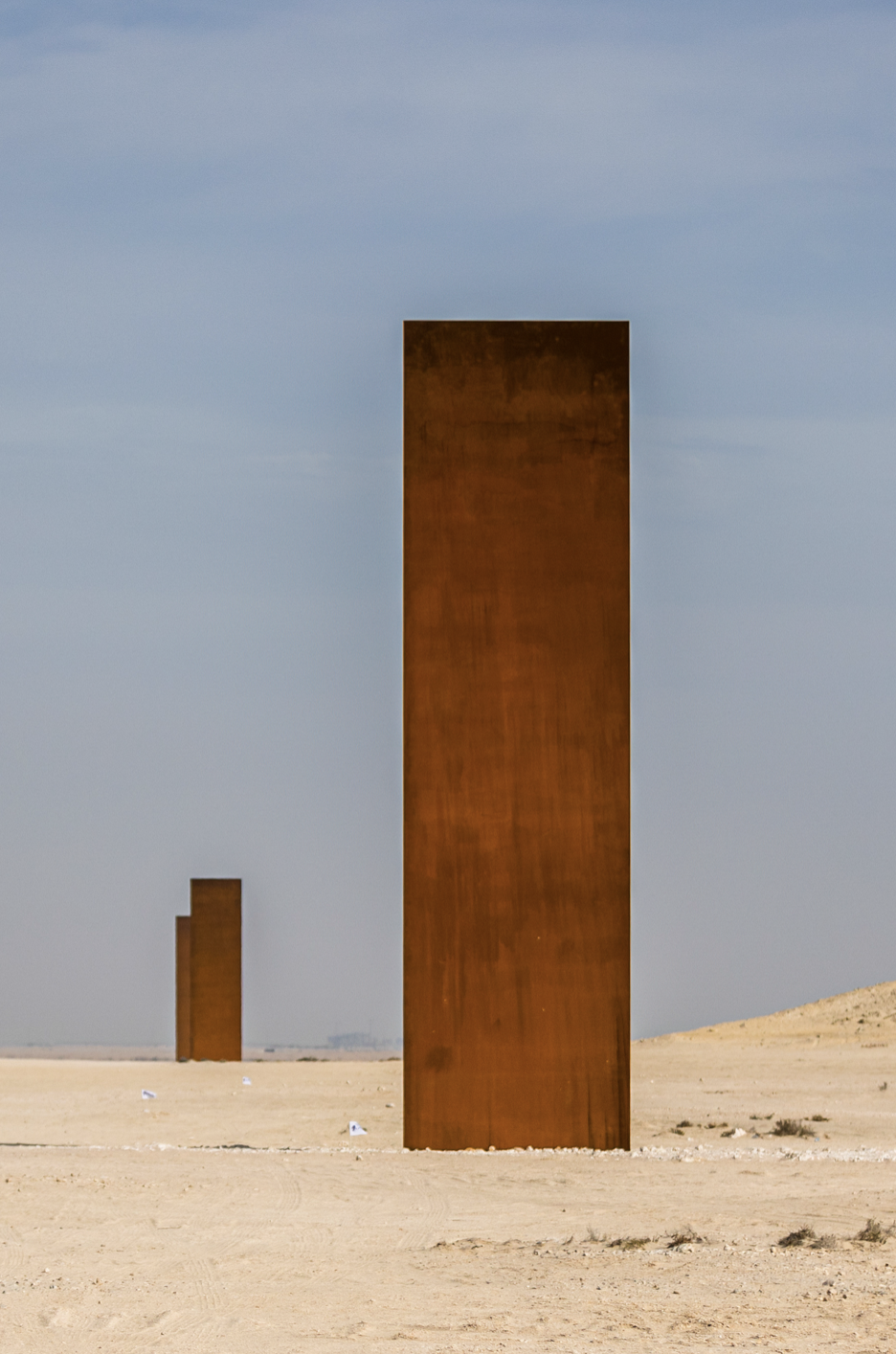
Figure 1. Richard Serra, East-West/West-East, Zekreet, Qatar. Non-AI photograph by Youssef.ma.o, Wikimedia Commons, CC BY-SA 4.0. Included here as an example of public art conceived through site, scale, landscape, material, and commissioning ambition.
The failure begins when public art is asked to behave like procurement. Procurement asks what can be supplied. Commissioning asks what a place needs to become.
Executive Argument
Public art fails when it is reduced to procurement because procurement is designed to secure a deliverable, not produce cultural meaning. It is a necessary administrative system, but a poor intellectual model for commissioning art. Procurement wants comparability, speed, compliance, risk reduction, and a price that can be defended in a spreadsheet. Public art needs context, authorship, uncertainty, negotiation, site intelligence, public imagination, and a long chain of interpretation that begins before anything is fabricated.
This is not an argument against process. Quite the opposite. The best public art requires strong process. It needs a brief, a budget, contractual clarity, technical review, fabrication oversight, conservation planning, and governance. But when these tools replace curatorial intelligence, the work becomes a supplied object. It may be large, expensive, polished, and photographed at sunset. It may still fail.
In the Gulf, the stakes are especially high. Saudi Arabia, Qatar, and the UAE are using public art, museum development, cultural districts, biennials, light festivals, and land-art commissions to shape international perception and local civic experience. This momentum is extraordinary. But it also exposes a structural risk: when cultural ambition moves faster than cultural translation, public art can become symbolic infrastructure without public depth. It becomes proof that money was spent, not proof that meaning was made.
For Core Art Strategies, this is the central issue. Public art is not a category of supply. It is a form of cultural authorship in space. When handled properly, it turns plazas, hotels, deserts, campuses, resorts, waterfronts, and headquarters into places with memory. When handled poorly, it produces expensive objects that stand in public while saying very little to the public.
1. Procurement Is Not the Enemy. Procurement Without Curatorial Intelligence Is.
The public sector and large private developments need procurement. Without it, cultural projects can become opaque, arbitrary, politically vulnerable, or financially irresponsible. The problem begins when procurement logic becomes the cultural logic of the artwork itself. The language changes first. The artist becomes a vendor. The artwork becomes a scope item. The commission becomes a deliverable. The site becomes a location. The public becomes a compliance condition. The tender asks for experience, method statement, insurance, technical capability, timeline, and cost. All of that matters. But none of it explains why the work should exist.
Best-practice public art guidance consistently argues for the opposite direction: commission artists early, develop site-specific responses, and integrate artistic thinking with the place, architecture, users, community, material, scale, and maintenance strategy. CreateSA’s commissioning guidelines state clearly that the strongest public art outcomes are achieved when artists develop site-specific works considering location, scale, form, and materials; the same document warns that purchasing works for installation is less likely to contribute meaningfully to place. It also notes that earlier artist engagement tends to produce better outcomes. [1]
The National Association for the Visual Arts makes the procurement problem even sharper. It observes that public art often follows the same procurement process as objects such as benches, playgrounds, and toilets, and warns that serious problems can arise when fabrication is tendered out rather than led by the artist. [2] This is the absurdity at the heart of bad public art: a process built for standardization is asked to produce a singular cultural event.
The issue is not whether public money or developer money should be accountable. It should. The issue is what kind of accountability is being measured. A project can satisfy procurement and still fail culturally. It can meet budget, meet timeline, meet installation standards, survive the defects liability period, and still produce nothing but visual administration.
2. The Gulf Is Building Cultural Visibility at Speed
The Gulf is no longer peripheral to the global art conversation. It is increasingly one of its most active laboratories. Frieze has described a generation of Gulf artists and projects redefining culture on collaborative terms at a time when Western museums and initiatives are expanding across the region. [3] The Art Newspaper has reported on Saudi Arabia’s revived modern art history and on the return of works originally planned for public squares in Riyadh in the late 1980s, then stored for decades and restored after acquisition by the Royal Commission for the City of Riyadh. [4]
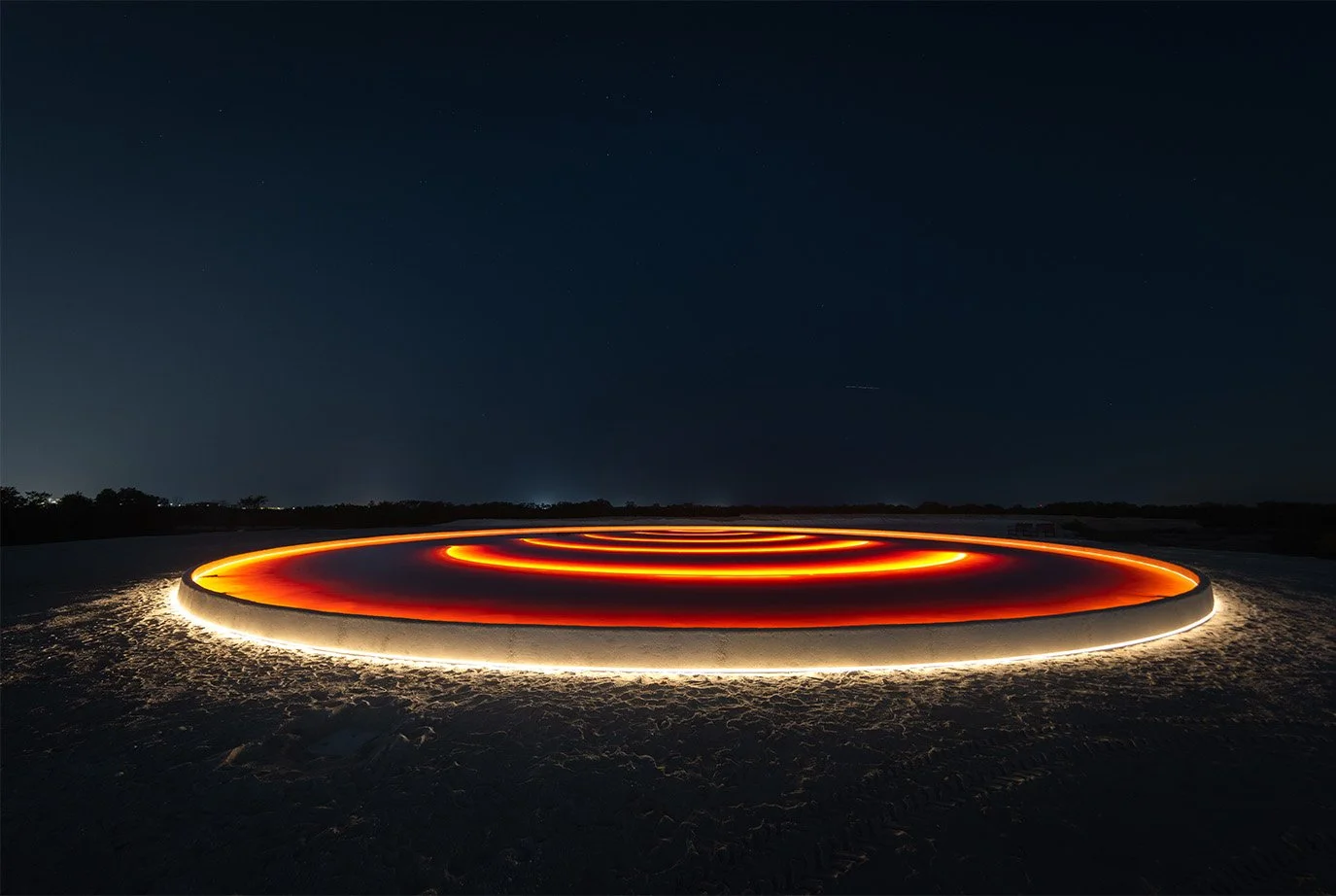
Abu Dhabi’s Manar Abu Dhabi, part of Public Art Abu Dhabi, uses newly commissioned light sculptures, projections, and immersive works across natural and urban landscapes. Its 2025 edition extends across Jubail Island, Al Ain, and other sites, with more than 23 newly commissioned works under the theme The Light Compass. [5] In Saudi Arabia, Wadi AlFann in AlUla is planned as a landscape-scale art destination, with major commissions by Agnes Denes, Manal AlDowayan, Michael Heizer, Ahmed Mater, and James Turrell. Its official framing emphasizes art in dialogue with nature, geology, ecosystems, and ancient histories. [6] In Qatar, Qatar Museums has built one of the region’s most visible public art programs, including Richard Serra, Subodh Gupta, Olafur Eliasson, Simone Fattal, Ernesto Neto, and others. [7]
This is not decorative spending. It is cultural positioning. The Gulf’s public art programs are tied to tourism, soft power, urban identity, national narrative, and international cultural legitimacy. That is precisely why procurement thinking is so dangerous. The more symbolic the investment, the more the work must be commissioned as culture, not purchased as evidence of culture.
The region does not need public art that merely proves that a public art budget existed. It needs public art that can withstand scrutiny after the opening ceremony, after the press release, after the drone shot, and after the architectural render has stopped circulating.
3. Gulf Example: Richard Serra in Qatar Shows What Commissioning Can Do
Richard Serra’s East-West/West-East in Qatar is useful because it is almost the opposite of procurement art. It is not an object selected to beautify a site. It is a site condition intensified into sculpture. The work consists of four steel plates aligned across the desert in Brouq Nature Reserve. Its force comes from a relationship between topography, distance, verticality, heat, rust, horizon, and movement. It asks the viewer to travel. It turns remoteness into part of the work.
The New Yorker reported that the plates were rolled in Germany, shipped through Antwerp, transported and craned into the western Qatari desert, and installed as Serra’s second public commission in Qatar. Serra said Qatar gave him the opportunity to work at a scale he could not have conceived elsewhere. He also described repeated visits to the site and the difficulty of working in the desert, including sandstorms and heat. [8]
That detail matters. The work did not begin as a product category. It emerged through patronage, site visits, ambition, and an unusually high tolerance for artistic scale. This does not mean every public art program should imitate Serra or import global names. It means that powerful public art often depends on the opposite of generic procurement: a commission shaped by context, trust, dialogue, risk, material intelligence, and a clear relationship between place and form.
The lesson for the Gulf is not that every development needs monumental steel. The lesson is that a commission must have an internal reason. In Serra’s case, the desert is not a backdrop. It is the co-author. Procurement language struggles to describe that. Cultural commissioning begins there.
4. Gulf Example: Manar Abu Dhabi and the Temporary Public Realm
Manar Abu Dhabi offers another model because it treats public art as a citywide experience rather than a single permanent object. Its focus on light, projections, immersive work, islands, mangroves, oases, and city locations allows public art to operate through time, movement, and atmosphere. The Department of Culture and Tourism describes Manar as an initiative that transforms natural vistas through light-art exhibitions and creates opportunities for residents and visitors to engage with artworks. [5]
Temporary programs matter because they can be less burdened by the anxiety of permanence. They can test publics, landscapes, and curatorial propositions. They can be more experimental, more responsive, and less likely to become dead monuments. Project for Public Spaces notes that temporary public art can be useful when a city wants to build a public-art tradition, because limited duration allows work to be more challenging and flexible while training emerging artists and involving communities. [9]
For the Gulf, this is important. A new cultural ecosystem cannot rely only on monumental permanent commissions. It also needs temporary works, artist residencies, experimental formats, local commissions, public education, open calls, curatorial texts, conservation planning, audience research, and post-installation evaluation. Otherwise, public art becomes a skyline of gestures rather than an ecosystem of meaning.
5. Gulf Example: Wadi AlFann Shows the Difference Between Land Art and Landmark Anxiety
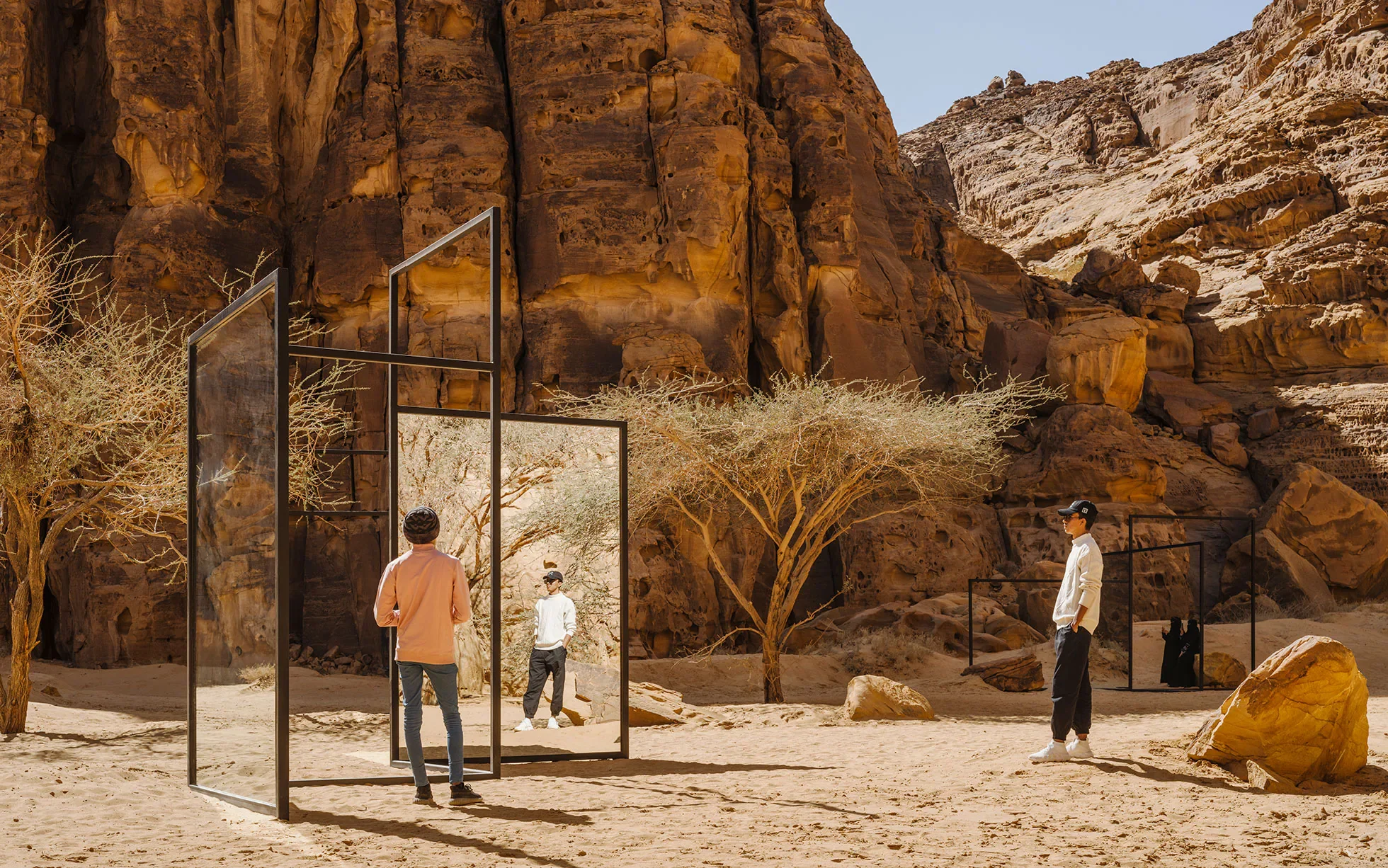
Wadi AlFann is one of the clearest tests of the Gulf’s public art future. The project’s ambition is exceptional: a vast landscape in AlUla planned for permanent works by internationally recognized land-art figures and major Saudi artists. The official project language is promising because it emphasizes learning from the desert, responding to topography, geology, ecosystems, and ancient histories. [6]
But this is also exactly where procurement thinking can become fatal. Land art cannot be commissioned like a procurement package for outdoor sculpture. It requires environmental study, archaeological sensitivity, public access planning, interpretive strategy, artist-led development, technical restraint, conservation logic, and a careful understanding of how the work will be experienced by local communities as well as cultural tourists. The line between a profound landscape commission and an Instagram destination can be very thin.
Wadi AlFann’s success will depend less on the fame of the artists than on the quality of translation between artists, land, ecology, curators, architects, engineers, archaeologists, tourism authorities, and visitors. Famous names can bring attention. They cannot automatically bring meaning. That meaning has to be built, protected, interpreted, and maintained.
6. When Public Art Fails: The International Warning of Tilted Arc
The most famous international warning is Richard Serra’s Tilted Arc, installed in 1981 in New York’s Federal Plaza and removed in 1989 after intense public controversy. The work was site-specific by design: a 120-foot-long, 12-foot-high Cor-Ten steel arc that cut across the plaza and changed how pedestrians moved through the space. The problem was not that the work lacked artistic seriousness. The problem was that the civic, political, bureaucratic, and everyday public systems around it could not sustain the conflict produced by the work.
Artforum’s record of the Tilted Arc hearing captures the larger issue: public art is not merely art placed outdoors. It changes the shared environment of people who may not have asked for it, may not like it, and may not share the values of the commissioning panel. [10] Smarthistory notes that Serra understood public art as a way to expose and critique the surrounding public space, not beautify it. [11] That is exactly why the work mattered. It is also why it became vulnerable.
Tilted Arc is often used as an argument for safer public art. That is the wrong lesson. The better lesson is that serious public art requires serious public process. Not a popularity contest. Not decorative compromise. Not riskless consensus. But rigorous preparation: stakeholder mapping, interpretive framing, civic communication, legal clarity, artist rights, maintenance planning, and a governance structure that can defend why a work exists even when it is disliked.
Procurement cannot solve that. Procurement can buy steel. It cannot prepare a public for the meaning of steel.
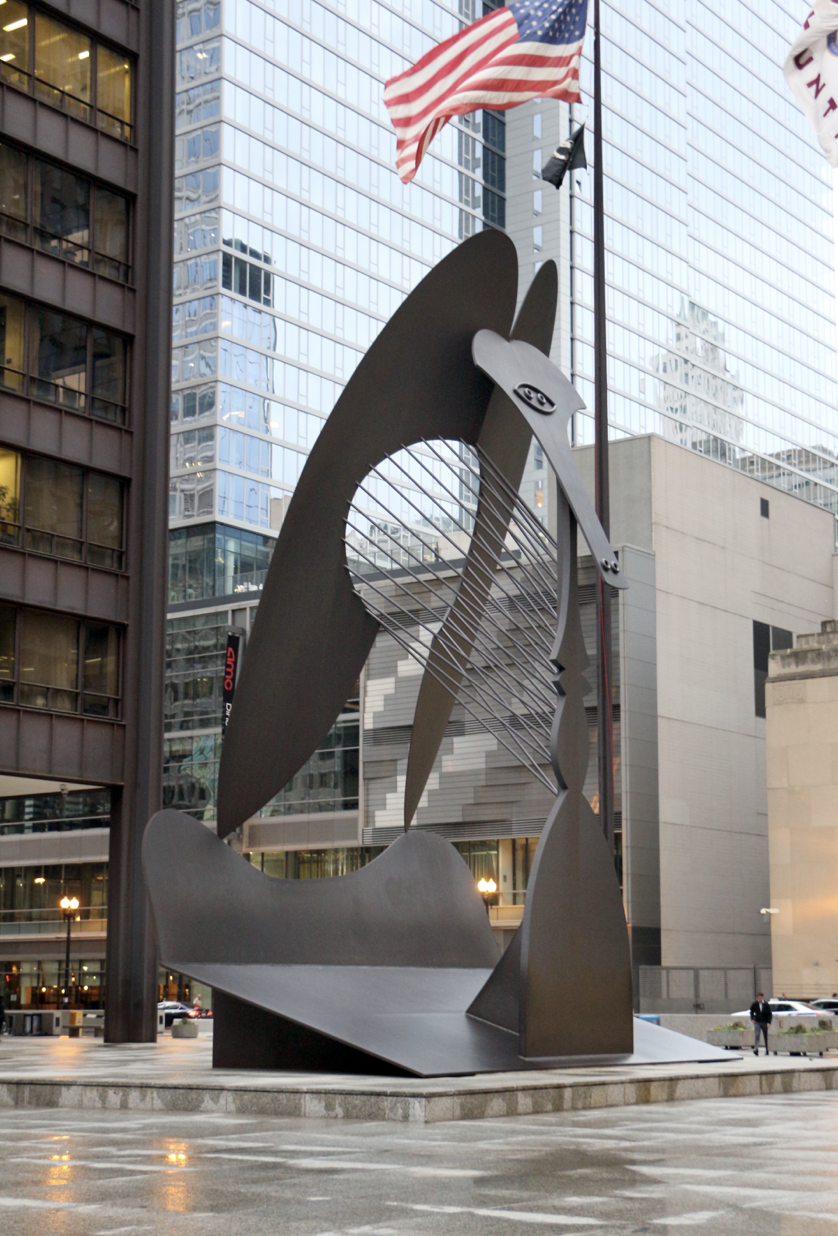
Figure 2. Pablo Picasso, Chicago Picasso, Daley Plaza, Chicago. Non-AI photograph by Sailko, Wikimedia Commons, CC BY 3.0. The work offers a comparison point: a major civic sculpture that initially challenged public taste but became part of the city’s identity.
7. Comparison: The Chicago Picasso and the Value of Civic Absorption
The Chicago Picasso, unveiled in 1967, is a useful counterpoint. At first, many residents did not know what to do with it. It did not behave like traditional civic sculpture. It was abstract, strange, and difficult to name. Over time, however, it became absorbed into the public identity of the city. Children climbed it. Workers met beneath it. It became less an object and more a civic habit.
The comparison matters for Gulf cities because public art cannot be judged only on day-one reception. Some works need time. Some need programming. Some need explanation. Some need public familiarity. But time only helps when the underlying commission has strength. Weak public art does not become profound because it survives. It becomes background.
The Chicago Picasso also shows that public art can be successful without being easy. The question is not whether everyone immediately likes a work. The question is whether the work has enough civic, spatial, and symbolic force to become meaningful over time. Procurement art rarely does, because it is designed to satisfy present conditions. Strong public art often makes a claim on the future.
8. The Procurement Symptoms: How to Recognize Public Art That Is Already Failing
Procurement-led public art has visible symptoms. First, the brief is too late. Art is introduced after architecture, landscape, circulation, lighting, and budget have already hardened. The result is leftover art for leftover sites: a roundabout, a blank wall, a lobby corner, a median, an entrance plaza. The work is then expected to create identity in a space that was never designed to receive identity.
Second, the brief is overdetermined and underthought. It lists themes such as heritage, innovation, sustainability, luxury, community, future, local culture, and excellence, but it does not define the conflict or intelligence of the site. It wants meaning without deciding what kind of meaning it can carry.
Third, the selection criteria reward the wrong strengths. Past experience, financial capacity, delivery timeline, and technical compliance dominate the assessment, while artistic risk, local insight, conceptual depth, and long-term public value become decorative scoring categories. This favors suppliers who know how to win tenders over artists who know how to transform place.
Fourth, fabrication is separated from authorship. The artist proposes; the fabricator delivers; the contractor value-engineers; the project manager compresses; the client approves; the artwork loses its spine. NAVA’s warning about fabrication being tendered away from artist leadership is exactly this problem. [2]
Fifth, the work has no interpretation strategy. It arrives with a plaque, a press release, and perhaps a QR code. That is not interpretation. Public art needs mediation, especially when it is complex, culturally layered, or placed in high-traffic environments where audiences vary widely.
Sixth, maintenance is treated as an afterthought. Public art lives in heat, humidity, dust, salt, touch, vandalism, landscaping, traffic, water, light, and time. Project for Public Spaces emphasizes maintenance and conservation planning as part of the public-art process. [9] In the Gulf, with extreme climate conditions and large-scale outdoor works, this is not administrative detail. It is survival.
9. What Serious Public Art Commissioning Requires
A serious public art process begins before the tender. It begins with diagnosis. What is the place? Who is the public? What histories are visible or buried? What kind of cultural intelligence does the project need? Is the site ceremonial, intimate, transitional, contemplative, commercial, civic, touristic, or contested? Is the goal memory, orientation, wonder, critique, participation, identity, or landmark status?
Only after diagnosis should a brief emerge. The brief should not dictate a shape. It should define a cultural problem. It should establish site conditions, audience expectations, technical limits, environmental realities, interpretive goals, governance structure, artist rights, and evaluation criteria. It should identify whether the project requires an open call, invited shortlist, direct commission, curatorial research phase, residency, community-based process, or integration with architecture.
The College Art Association describes public art commissions as an integral component of city and community building and design, not merely objects placed in public locations. [12] The National Arts Council Singapore guidance says new commissioners may benefit from engaging a curator to advise on the process, prepare the commissioning brief, and select artists. [13] This is the point: a public art commission needs intellectual stewardship before procurement mechanics begin.
For Gulf developments, the consultant or curator must also be a translator. They must translate between artist and developer, government entity and public, local context and international expectation, cultural symbolism and engineering constraint, ambition and maintenance. Without that translation, the project either becomes generic international art or overly literal local decoration. Both are failures.
10. Public Art in Hospitality, Real Estate, and Master Planning
The procurement problem is not limited to government plazas. It is equally present in hospitality and real estate. Luxury hotels and mixed-use developments often allocate budgets for art but treat the art package like FF&E. It is scheduled after interior design, priced after value engineering, and selected to match finishes. The art becomes the final aesthetic seasoning, not a strategic layer of identity.
This is why Core Art Strategies argues that public and semi-public art should be developed as infrastructure. In a hotel, art can shape arrival, orientation, memory, brand perception, cultural positioning, and guest movement. In a headquarters, it can express institutional identity and civic presence. In a resort, it can connect landscape, architecture, ecology, and experience. In a district, it can define a network of meaning across public space.
But none of that happens when the work is bought late. Late art is usually asked to compensate for weak thinking elsewhere. It is asked to make a corridor feel cultural, a plaza feel civic, a tower feel rooted, a lobby feel memorable. Public art should not be used as emergency meaning. It should be part of the project’s strategic formation.
11. A Better Model for the Gulf: From Tender Item to Cultural Commission
The Gulf can lead in public art because it has the ambition, budgets, sites, institutions, and pace to do things that many older cultural economies cannot. But leadership will require a shift from acquisition mentality to commissioning intelligence. The question should not be: what sculpture can we install here? The question should be: what cultural condition should this place create?
That shift requires five changes. First, art consultants and curators must be brought in during concept or schematic design, not after construction documentation. Second, public art briefs must be written as cultural documents, not only procurement documents. Third, artist selection must include conceptual and contextual criteria equal to delivery capacity. Fourth, local and regional artists must be commissioned not as tokens, but as producers of knowledge. Fifth, documentation, education, and maintenance must be funded as part of the artwork, not as optional accessories.
The Gulf’s strongest public art future will not come from choosing between global names and local voices. It will come from building commissioning systems capable of using both intelligently. Global artists can bring scale, technique, and international resonance. Local and regional artists bring situated knowledge, language, historical sensitivity, and lived context. A serious art consultant understands that the point is not diversity for optics. The point is depth.
Conclusion: Public Art Should Not Be a Purchased Gesture
Public art fails when it becomes procurement because procurement cannot carry the full burden of public meaning. It can secure services, manage risk, compare submissions, and protect budgets. It cannot by itself produce cultural memory. It cannot decide what a place deserves. It cannot know when an artwork has presence, when a brief is shallow, when a site is wrong, when a material is lying, or when a commission has become a decorative alibi for a project that forgot to think.
The Gulf is entering a period in which public art will help define how cities, cultural districts, hotels, resorts, museums, airports, waterfronts, and real-estate developments are remembered. That makes the commissioning process a matter of strategy, not taste. The work must be artistically strong, culturally aware, technically disciplined, environmentally intelligent, and publicly legible. It must survive both climate and interpretation.
Public art is not the sculpture at the end of the project. It is the question at the beginning: what should this place mean, and who has the intelligence to make that meaning visible?
That is why Core Art Strategies positions art consultancy not as sourcing, but as cultural strategy. The consultant’s role is not to decorate the public realm. It is to protect the difference between a supplied object and a commissioned work of public meaning.
7. Comparison: The Chicago Picasso and the Value of Civic Absorption
The Chicago Picasso, unveiled in 1967, is a useful counterpoint. At first, many residents did not know what to do with it. It did not behave like traditional civic sculpture. It was abstract, strange, and difficult to name. Over time, however, it became absorbed into the public identity of the city. Children climbed it. Workers met beneath it. It became less an object and more a civic habit.
The comparison matters for Gulf cities because public art cannot be judged only on day-one reception. Some works need time. Some need programming. Some need explanation. Some need public familiarity. But time only helps when the underlying commission has strength. Weak public art does not become profound because it survives. It becomes background.
The Chicago Picasso also shows that public art can be successful without being easy. The question is not whether everyone immediately likes a work. The question is whether the work has enough civic, spatial, and symbolic force to become meaningful over time. Procurement art rarely does, because it is designed to satisfy present conditions. Strong public art often makes a claim on the future.
8. The Procurement Symptoms: How to Recognize Public Art That Is Already Failing
Procurement-led public art has visible symptoms. First, the brief is too late. Art is introduced after architecture, landscape, circulation, lighting, and budget have already hardened. The result is leftover art for leftover sites: a roundabout, a blank wall, a lobby corner, a median, an entrance plaza. The work is then expected to create identity in a space that was never designed to receive identity.
Second, the brief is overdetermined and underthought. It lists themes such as heritage, innovation, sustainability, luxury, community, future, local culture, and excellence, but it does not define the conflict or intelligence of the site. It wants meaning without deciding what kind of meaning it can carry.
Third, the selection criteria reward the wrong strengths. Past experience, financial capacity, delivery timeline, and technical compliance dominate the assessment, while artistic risk, local insight, conceptual depth, and long-term public value become decorative scoring categories. This favors suppliers who know how to win tenders over artists who know how to transform place.
Fourth, fabrication is separated from authorship. The artist proposes; the fabricator delivers; the contractor value-engineers; the project manager compresses; the client approves; the artwork loses its spine. NAVA’s warning about fabrication being tendered away from artist leadership is exactly this problem. [2]
Fifth, the work has no interpretation strategy. It arrives with a plaque, a press release, and perhaps a QR code. That is not interpretation. Public art needs mediation, especially when it is complex, culturally layered, or placed in high-traffic environments where audiences vary widely.
Sixth, maintenance is treated as an afterthought. Public art lives in heat, humidity, dust, salt, touch, vandalism, landscaping, traffic, water, light, and time. Project for Public Spaces emphasizes maintenance and conservation planning as part of the public-art process. [9] In the Gulf, with extreme climate conditions and large-scale outdoor works, this is not administrative detail. It is survival.
9. What Serious Public Art Commissioning Requires
A serious public art process begins before the tender. It begins with diagnosis. What is the place? Who is the public? What histories are visible or buried? What kind of cultural intelligence does the project need? Is the site ceremonial, intimate, transitional, contemplative, commercial, civic, touristic, or contested? Is the goal memory, orientation, wonder, critique, participation, identity, or landmark status?
Only after diagnosis should a brief emerge. The brief should not dictate a shape. It should define a cultural problem. It should establish site conditions, audience expectations, technical limits, environmental realities, interpretive goals, governance structure, artist rights, and evaluation criteria. It should identify whether the project requires an open call, invited shortlist, direct commission, curatorial research phase, residency, community-based process, or integration with architecture.
The College Art Association describes public art commissions as an integral component of city and community building and design, not merely objects placed in public locations. [12] The National Arts Council Singapore guidance says new commissioners may benefit from engaging a curator to advise on the process, prepare the commissioning brief, and select artists. [13] This is the point: a public art commission needs intellectual stewardship before procurement mechanics begin.
For Gulf developments, the consultant or curator must also be a translator. They must translate between artist and developer, government entity and public, local context and international expectation, cultural symbolism and engineering constraint, ambition and maintenance. Without that translation, the project either becomes generic international art or overly literal local decoration. Both are failures.
10. Public Art in Hospitality, Real Estate, and Master Planning
The procurement problem is not limited to government plazas. It is equally present in hospitality and real estate. Luxury hotels and mixed-use developments often allocate budgets for art but treat the art package like FF&E. It is scheduled after interior design, priced after value engineering, and selected to match finishes. The art becomes the final aesthetic seasoning, not a strategic layer of identity.
This is why Core Art Strategies argues that public and semi-public art should be developed as infrastructure. In a hotel, art can shape arrival, orientation, memory, brand perception, cultural positioning, and guest movement. In a headquarters, it can express institutional identity and civic presence. In a resort, it can connect landscape, architecture, ecology, and experience. In a district, it can define a network of meaning across public space.
But none of that happens when the work is bought late. Late art is usually asked to compensate for weak thinking elsewhere. It is asked to make a corridor feel cultural, a plaza feel civic, a tower feel rooted, a lobby feel memorable. Public art should not be used as emergency meaning. It should be part of the project’s strategic formation.
11. A Better Model for the Gulf: From Tender Item to Cultural Commission
The Gulf can lead in public art because it has the ambition, budgets, sites, institutions, and pace to do things that many older cultural economies cannot. But leadership will require a shift from acquisition mentality to commissioning intelligence. The question should not be: what sculpture can we install here? The question should be: what cultural condition should this place create?
That shift requires five changes. First, art consultants and curators must be brought in during concept or schematic design, not after construction documentation. Second, public art briefs must be written as cultural documents, not only procurement documents. Third, artist selection must include conceptual and contextual criteria equal to delivery capacity. Fourth, local and regional artists must be commissioned not as tokens, but as producers of knowledge. Fifth, documentation, education, and maintenance must be funded as part of the artwork, not as optional accessories.
The Gulf’s strongest public art future will not come from choosing between global names and local voices. It will come from building commissioning systems capable of using both intelligently. Global artists can bring scale, technique, and international resonance. Local and regional artists bring situated knowledge, language, historical sensitivity, and lived context. A serious art consultant understands that the point is not diversity for optics. The point is depth.
Conclusion: Public Art Should Not Be a Purchased Gesture
Public art fails when it becomes procurement because procurement cannot carry the full burden of public meaning. It can secure services, manage risk, compare submissions, and protect budgets. It cannot by itself produce cultural memory. It cannot decide what a place deserves. It cannot know when an artwork has presence, when a brief is shallow, when a site is wrong, when a material is lying, or when a commission has become a decorative alibi for a project that forgot to think.
The Gulf is entering a period in which public art will help define how cities, cultural districts, hotels, resorts, museums, airports, waterfronts, and real-estate developments are remembered. That makes the commissioning process a matter of strategy, not taste. The work must be artistically strong, culturally aware, technically disciplined, environmentally intelligent, and publicly legible. It must survive both climate and interpretation.
Public art is not the sculpture at the end of the project. It is the question at the beginning: what should this place mean, and who has the intelligence to make that meaning visible?
That is why Core Art Strategies positions art consultancy not as sourcing, but as cultural strategy. The consultant’s role is not to decorate the public realm. It is to protect the difference between a supplied object and a commissioned work of public meaning.