
Can a Broken City Produce Better Art?
Instability, artistic language, and the cultural intelligence of Beirut
By Mohamad Makouk | Core Art Strategies
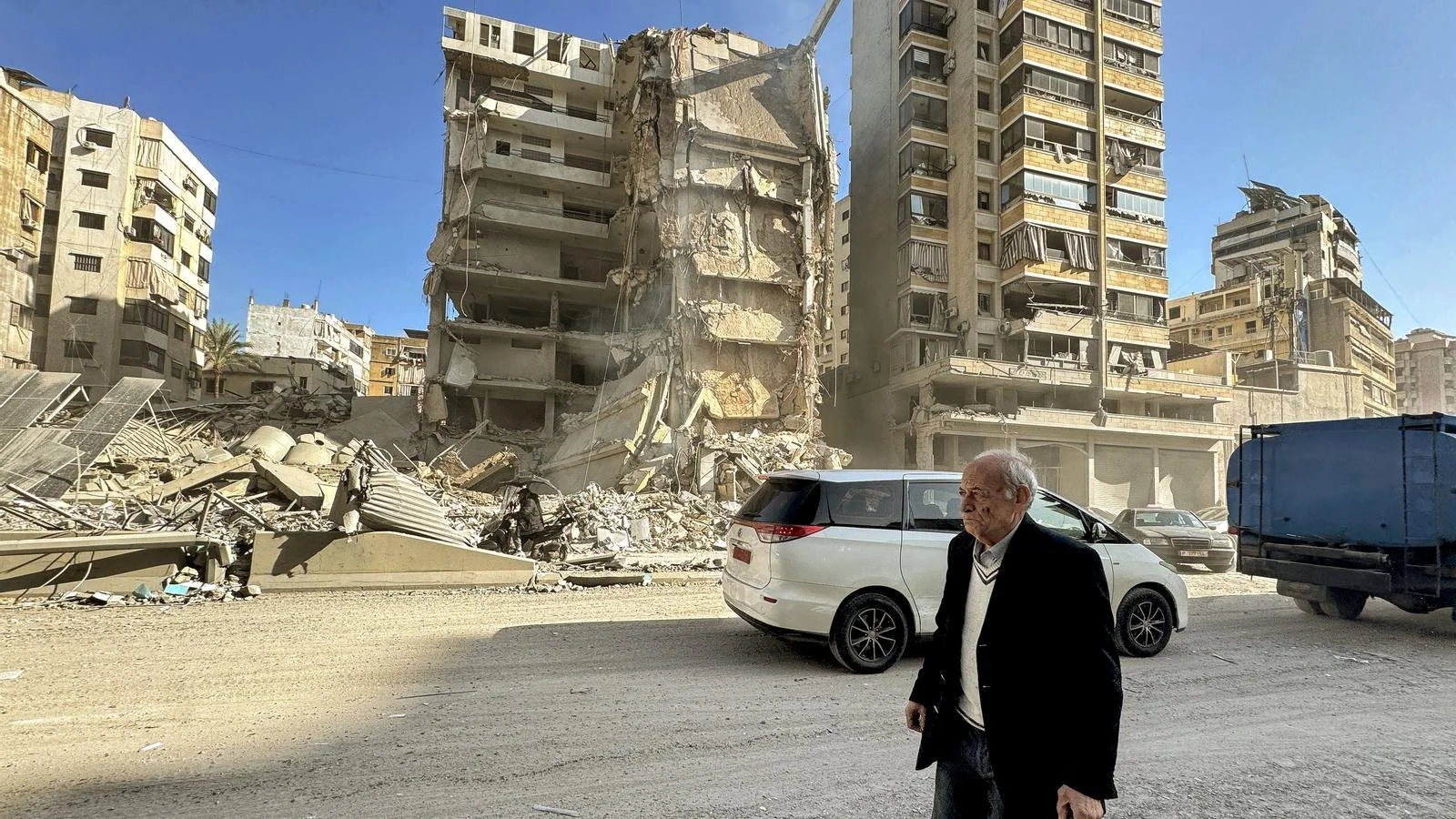
The seduction of the broken city
A broken city is a dangerous subject because it attracts lazy beauty. It invites the outsider to confuse exposed concrete with truth, power cuts with mood, ruins with authenticity, and exhausted citizens with a convenient cast of survivors. Beirut has suffered enough from this kind of gaze. It has been photographed as texture, narrated as chaos, sold as nightlife, mourned as nostalgia, and praised as resilient by people who often leave before the generator dies.
So the question must be handled like glass. Can a broken city produce better art? Not because suffering is noble. Not because poverty is interesting. Not because collapse makes artists more honest by some mystical force. A city does not become profound because its banks fail, its port explodes, its institutions decay, or its citizens learn to live by improvisation. These things damage bodies, time, confidence, archives, studios, markets, and sleep. They also damage the possibility of making art at all.
But instability can sharpen artistic language. It can make decoration feel obscene. It can strip away the polished mannerisms of safe culture and force art to ask more direct questions about power, memory, class, masculinity, faith, money, image, and survival. In a broken city, art often loses the luxury of being only beautiful. It must either become necessary, or admit that it is furniture.
For Core Art Strategies, this distinction matters. A serious art consultancy, cultural strategy practice, or public art advisory cannot simply import artworks into a wounded context and call the result identity. It must read the city first. It must understand whether a site needs healing, confrontation, preservation, satire, documentation, silence, or a refusal to beautify what should remain politically uncomfortable. Art strategy begins where wall filling ends. In cities like Beirut, it begins with the uncomfortable recognition that beauty alone can become an anesthetic.
The better question, then, is not whether broken cities make better art. It is whether broken cities force better artistic thinking. The answer is sometimes yes, but never automatically. Only when artists are given enough freedom, institutions enough courage, and cultural planners enough intelligence to understand that fracture is not a style. It is a condition.
Rupture is not a muse. It is a pressure system.
Lebanon is not operating under an abstract poetic crisis. Since 2019, the country has faced one of the most severe economic and financial collapses in modern history. The World Bank described the crisis in 2021 as likely to rank among the top ten, and possibly the top three, most severe global crisis episodes since the mid nineteenth century [1]. Its more recent country overview describes a banking sector left insolvent, a Lebanese pound that lost 98 percent of its value, and reconstruction needs intensified by the 2023 to 2024 conflict [2]. This is not atmosphere. It is infrastructure failing in public.
Then came the Beirut port explosion of August 4, 2020. Human Rights Watch reported 218 deaths, 7,000 injuries, extensive psychological harm, 77,000 damaged apartments, and more than 300,000 people displaced [3]. UNESCO, through the Li Beirut initiative, documented the cultural dimension of that disaster: schools, heritage buildings, museums, galleries, artists, artisans, archives, and creative industries all required emergency support [4]. In other words, the blast did not merely break windows. It interrupted memory systems.
This matters because art is never produced by the artist alone. It depends on electricity, rent, suppliers, scanners, transport, insurance, collectors, shipping, framers, fabricators, institutions, documentation, storage, and attention. When a city breaks, the artist does not become magically free. The artist becomes responsible for too many things at once. They become producer, archivist, accountant, technician, fixer, therapist, witness, and sometimes refugee within their own city.
Yet pressure changes form. In a stable city, bad art can hide behind finish. A large budget can make emptiness look important. A glossy lobby can disguise the fact that its cultural program has no intelligence. In a broken city, finish becomes harder to fake. The work is forced into contact with life. A painting may carry the dust of a damaged studio. A film may be shaped by interruptions. An archive may be assembled because the official archive cannot be trusted. A performance may happen in a theater that itself feels like evidence.
This does not make the work better by default. It makes the lie harder to maintain.
Beirut’s strongest art has often come from distrust
The most interesting art produced from Beirut is rarely sentimental about Beirut. It is not usually tourist art. It does not simply say: look how beautiful the ruin is. Instead, much of the strongest postwar artistic language in Lebanon has been built on suspicion. Suspicion of images. Suspicion of official history. Suspicion of heroic narratives. Suspicion of state memory. Suspicion of the clean surface.
This is why the archive became one of Beirut’s great artistic forms. The Arab Image Foundation, established in Beirut in 1997 by photographers and artists including Fouad Elkoury, Samer Mohdad, and Akram Zaatari, did not merely collect photographs. It helped turn the photographic archive into a field of artistic, historical, and political inquiry [5]. In a city where memory can be privatized, erased, sectarianized, or weaponized, the archive becomes more than preservation. It becomes resistance to disappearance.
Walid Raad’s Atlas Group, undertaken between 1989 and 2004, is one of the clearest examples. The project researched and documented the contemporary history of Lebanon, with particular emphasis on the wars of 1975 to 1990, through audio, visual, and literary documents that complicate the border between fact, fiction, evidence, and memory [6]. Raad’s work does not simply represent war. It examines how war becomes representable, how images lie, how documents seduce, how the archive itself can be staged.
Joana Hadjithomas and Khalil Joreige have also built a practice around absence, latency, and the unfinished image. Their work repeatedly asks what happens when history is not fully visible, when evidence survives damaged, when the disappeared remain structurally present. The point is not to make Lebanon tragic. The point is to show that the missing is not empty. It has weight. It occupies the room.
Mounira Al Solh, working across drawing, embroidery, video, text, installation, and performance, shows another side of this intelligence. Her practice often engages conflict, displacement, equality, personal histories, and everyday acts of storytelling without reducing subjects to victimhood [7]. She turns micro-history into form. She reminds us that in a broken region, the small account can be more politically precise than the monumental statement.
These practices are not better because Lebanon is broken. They are better because they refuse the cheap grammar that brokenness invites. They do not ask the viewer to admire suffering. They ask the viewer to examine the systems that produce it, hide it, repeat it, aestheticize it, and then sell it back as culture.
Institutions become nervous systems when the state fails
In stable cultural ecosystems, museums and art spaces often behave like platforms. In unstable cities, they can become nervous systems. They transmit signals when official channels collapse. They preserve memory when records are unreliable. They gather communities when public trust is low. They give artists not only exhibition space, but oxygen.
Ashkal Alwan’s Home Works forum is a crucial example. The ninth edition, announced for Beirut between November 2023 and October 2024, unfolded across Ashkal Alwan, the Arab Image Foundation, Beirut Art Center, Madina Theater, Metro Al Madina, Sunflower Theater, and the Sursock Museum [8]. Its own description notes that Home Works has consistently taken place in Beirut since 2002 in spite of perpetual instability [8]. That phrase is important. In spite of instability. Not because of it. The distinction saves the argument from vulgar romance.
The Sursock Museum offers another model. After the port explosion, it was not enough to repair a building. A museum is not only walls. It is climate control, electrical systems, glass, wood, conservation protocols, collections, public trust, donor confidence, and the symbolic continuity of a city’s cultural life. UNESCO announced the completion of rehabilitation works in May 2023 after support from Italy, France, and ALIPH, with the museum set to reopen on May 26, 2023 [9]. Al Jazeera reported that 57 artworks were damaged and carefully restored, and that all pieces, including those in storage, had to be cleaned by specialists [10].
The reopening of a museum after such damage is not a feel-good story. It is an argument. It says that culture is not a luxury item to be addressed after roads, banks, and ministries. It is one of the ways a city remembers how to remain a city. UNESCO’s Li Beirut initiative made the same point by framing culture as part of recovery, social cohesion, and the revival of urban life, not as decoration after emergency aid [4].
This is where art consultancy and cultural strategy become serious. In a wounded city, placing an artwork is never neutral. A hotel lobby, corporate headquarters, public square, cultural district, residential development, or restored heritage site can either flatten local memory into a marketable mood, or it can commission work that understands where it stands. The role of an art consultant is not to make trauma tasteful. It is to prevent context from being violated by convenience.
What broken cities teach art, and what they steal from it
Broken cities can teach art compression. When resources are scarce and institutions unstable, artists learn to say more with less. The work may become sharper because there is less room for ornamental weakness. It may become more direct, more elliptical, more materially inventive. Debris becomes material. Delay becomes structure. Noise becomes rhythm. The unfinished becomes honest because completion itself has become politically suspect.
They can teach art suspicion of spectacle. In a city where the spectacular event often arrives as disaster, spectacle becomes morally unstable. The artist learns that scale is not depth. A small drawing can carry more force than a monumental object if the monumental object has no ethical relation to its site. A video made from archival fragments can do more cultural work than an expensive sculpture installed because a procurement file required an artwork.
They can teach art the intelligence of the ordinary. Broken cities force attention onto daily choreography: waiting for electricity, navigating streets, moving money, finding water, living with interrupted infrastructure, making beauty without trusting permanence. The ordinary becomes not banal, but political. This is one reason Beirut has produced such significant practices around documents, domestic spaces, inherited photographs, family narratives, found materials, and urban fragments.
But broken cities also steal. They steal time from artists. They steal concentration. They steal health. They make production slower and more expensive. They push artists to emigrate. They turn every project into logistics. They damage archives, studios, museums, and artworks. They exhaust the people expected to be endlessly resilient. They make funding precarious and dependence on foreign institutions more complicated. They create the risk that local art will be valued abroad only when it performs crisis in a recognizable accent.
This is the cruel paradox. A broken city may produce sharper art, but it may also make it impossible for artists to remain long enough to produce it. The city becomes a machine that generates urgency and then consumes the urgent.
The global pattern: Sarajevo, Berlin, New York, Athens
Beirut is not alone in this pattern. Other cities have shown how fracture can alter artistic language, sometimes with extraordinary results and sometimes with dangerous simplifications.
During the siege of Sarajevo, artists and curators developed practices that resisted surveillance, control, and the militarization of everyday life. Internationale Online describes how public spaces and ruins were reclaimed as spaces of communication, socialization, alternative exhibition, and micro-community, with nontraditional materials and actions replacing conventional gallery formats [11]. This was not the romance of war. It was culture functioning as tactical life.
Berlin after the fall of the Wall offers another version. The East Side Gallery, painted in 1990, transformed more than 1.3 kilometers of the former Berlin Wall into an open-air gallery involving more than 118 artists from 21 countries [12]. The project converted a structure of division into a public surface of memory, hope, anxiety, and tourism. Yet its later conflicts around preservation, development, and commercialization also show what happens when a political scar becomes a branded landmark. The broken object can become a museum. It can also become real estate pressure.
New York in the 1970s and early 1980s reveals a different urban lesson. Financial crisis, disinvestment, abandoned industrial spaces, cheap rents, and social rupture created conditions in which punk, hip-hop, graffiti, loft jazz, downtown performance, independent film, and experimental art collided. The Gotham Center’s account of the period names Basquiat, Keith Haring, Cindy Sherman, Jenny Holzer, David Wojnarowicz, punk, disco, graffiti, and a wider downtown ecosystem emerging amid urban decline [13]. Again, decline did not make the art great. But it changed the terms of access. It opened spaces where less sanctioned languages could take form.
Athens during the financial crisis offers a warning. When documenta 14 split itself between Kassel and Athens in 2017, it brought international attention to a city marked by austerity and political strain. But the project also triggered debate over whether crisis was being used as a curatorial setting, a stage onto which a major Northern European institution could project its own anxieties. Stedelijk Studies described documenta 14 in Athens as both important and controversial, a double mirror exposing Greece’s relation to Europe and Europe’s relation to Greece [14]. For art strategy, the lesson is clear: using a city as a symbol is not the same as working with it.
These examples point to a principle. Instability can produce artistic invention when local agents shape the language. It becomes exploitation when powerful outsiders treat the wounded city as scenery.
Why polished cities often produce weaker public art
A polished city is not necessarily culturally strong. Many wealthy urban projects produce public art that is technically expensive and intellectually empty. The problem is not luxury. The problem is late thinking. When art is brought in after the architecture is finished, after the circulation is fixed, after the brand narrative is written, after the procurement category is approved, art becomes a decorative afterthought. It is expected to perform identity without having been allowed to help build it.
This is why broken cities can embarrass polished ones. In a broken city, even a small intervention can have intensity because it is forced to address a real condition. In a polished development, a monumental artwork can look dead because it has no conflict to negotiate, no question to ask, no social intelligence, no relationship to memory, no necessity beyond budget absorption. It shines, but it does not speak.
Hospitality art consultancy, real estate art strategy, corporate art curation, cultural districts, museums, public art programs, and private collections all face the same risk. Without cultural intelligence, art becomes atmosphere. In hotels, it becomes wall treatment. In headquarters, it becomes brand polish. In public space, it becomes civic wallpaper. In luxury residences, it becomes proof of taste. None of this is enough.
Core Art Strategies exists in opposition to that weakness. The point is not to make projects look cultured. The point is to construct cultural meaning from the beginning. This means reading place, architecture, audience, history, material, circulation, memory, and future value before commissioning or acquiring anything. It means understanding that art has different jobs in different contexts. Sometimes it should welcome. Sometimes it should disturb. Sometimes it should document. Sometimes it should refuse glamour. Sometimes it should make a visitor understand that they are not standing in a generic luxury space, but in a specific cultural system.
A broken city teaches this because it punishes superficiality. It does not allow art to hide behind finish for long.
Beirut should not be used as texture
The worst way to write about Beirut is to use it as an aesthetic filter. Bullet holes, old balconies, sea light, dust, nightlife, concrete, generators, broken pavements, saints, cigarettes, and melancholy music. The city has been reduced to these motifs so often that they now risk becoming a visual cliché. The broken city becomes a backdrop. The artist becomes a local witness. The collector becomes moved. The institution becomes relevant. The wound becomes content.
This is exactly what a serious cultural strategy must reject. Beirut is not a backdrop. It is a living cultural system made of memory, class, sectarian geography, migration, money, private initiatives, collapsed public services, multilingual codes, inherited trauma, absurd humor, beauty, decay, arrogance, tenderness, violence, and intelligence. Its art cannot be understood through ruin alone. It must be read through its systems of survival and contradiction.
The city’s artistic force comes partly from the fact that Beirut rarely allows a single narrative to stand. Every claim is contested. Every image has a counter-image. Every memory has another owner. Every archive has a missing drawer. This makes art from Beirut unusually alert to the instability of truth. It is why so much of its strongest work deals with evidence, performance, secrecy, fragments, testimony, fiction, disappearance, and the failure of official language.
In this sense, Beirut does not produce better art because it is broken. It produces urgent art when artists refuse to let brokenness become either shame or brand. The city’s best cultural work does not say: we survived, therefore admire us. It says: examine the conditions that made survival necessary.
The CAS position: cultural strategy after collapse
For Core Art Strategies, the question has direct professional consequences. If broken cities can produce sharper artistic language, then cultural strategy must protect that language from being flattened by development, tourism, and institutional vanity. It must help artists, clients, developers, hospitality groups, museums, foundations, and public agencies understand that art is not a healing sticker applied to damaged surfaces. It is an operating system for meaning.
In Beirut, this means working with context rather than extracting from it. It means asking whether a new hotel, art space, headquarters, restaurant, residence, or public project is adding intelligence to the city or merely borrowing its aura. It means commissioning artists because their work understands the site, not because their nationality supplies authenticity. It means treating archives, craftspeople, writers, fabricators, photographers, designers, and local institutions as part of the cultural ecosystem, not as decorative suppliers.
In the Gulf, the lesson is equally important. Saudi Arabia, Qatar, and the UAE are investing heavily in cultural districts, hospitality, museums, art programs, public commissions, and destination-making. These are not broken cities in the same way Beirut is broken, but they face a different risk: producing too much polish too quickly. The danger there is not scarcity. It is surface abundance. Cultural strategy must prevent rapid development from becoming a collection of expensive objects without roots.
This is where Beirut’s intelligence becomes transferable without being copied. The lesson is not to import Beirut’s wounds. The lesson is to import its suspicion of empty images. Its insistence that art must speak to power, memory, place, and contradiction. Its refusal, at its best, to accept beauty as sufficient.
A serious art consultant should be able to work between these conditions. To understand the broken city without exploiting it. To understand the polished city without flattering it. To build art programs where identity is not an afterthought, but a structural decision.
Conclusion: the break is not the gift
So, can a broken city produce better art? Sometimes. But the sentence is still dangerous. It becomes false the moment it turns suffering into a production model. No artist should need a collapsed economy, a destroyed museum, a failed state, a vanished archive, a damaged studio, or a wounded body in order to make work that matters.
A better answer is this: broken cities can expose weak art. They can make decorative language look indecent. They can force artists and institutions to invent forms that respond to pressure rather than taste. They can generate art that is less polished, less obedient, less market-ready, but more urgent, more structurally intelligent, and more difficult to neutralize.
But only if the city’s cultural actors are allowed to think, not merely survive. Only if institutions are rebuilt not as symbols of resilience, but as working infrastructures. Only if cultural strategy refuses to turn damage into décor. Only if artists are supported before they are celebrated abroad. Only if the broken city is understood not as an aesthetic, but as a field of conflict, memory, and possibility.
Beirut’s lesson is not that pain makes art better. Beirut’s lesson is that art becomes powerful when it refuses to lie about the systems that shape life. That is not romantic. It is sharper than romance. It is cultural intelligence under pressure.
Sources and Notes
[1] World Bank, “Lebanon Sinking into One of the Most Severe Global Crises Episodes, amidst Deliberate Inaction,” June 1, 2021. https://www.worldbank.org/en/news/press-release/2021/05/01/lebanon-sinking-into-one-of-the-most-severe-global-crises-episodes[2] World Bank Group, Lebanon country overview, accessed May 2026. https://www.worldbank.org/ext/en/country/lebanon[3] Human Rights Watch, “They Killed Us from the Inside: An Investigation into the August 4 Beirut Blast,” August 3, 2021. https://www.hrw.org/report/2021/08/03/they-killed-us-inside/investigation-august-4-beirut-blast[4] UNESCO, “Li Beirut: Taking stock of UNESCO-led initiatives to preserve heritage and culture one year after Beirut port blasts,” updated March 5, 2026. https://www.unesco.org/en/articles/li-beirut-taking-stock-unesco-led-initiatives-preserve-heritage-and-culture-one-year-after-beirut[5] SFMOMA Open Space, Sarah Rogers, “Culture ’45 and the Rise of Beirut’s Contemporary Art Scene,” October 4, 2012. https://openspace.sfmoma.org/2012/10/6lines-beirut/[6] The Atlas Group, “The Atlas Group (1989-2004),” official project site. https://www.theatlasgroup1989.org/[7] Sfeir-Semler Gallery, “Mounira Al Solh,” artist profile. https://sfeir-semler.com/artists/artists/mounira-al-solh[8] Ashkal Alwan, “Home Works Forum 9,” 2023 to 2024 program page. https://www.ashkalalwan.org/program.php?category=2&id=515[9] United Nations Lebanon / UNESCO, “UNESCO completed the rehabilitation of the iconic Sursock Museum damaged by Beirut port explosions,” May 11, 2023. https://lebanon.un.org/en/231183-unesco-completed-rehabilitation-iconic-sursock-museum-damaged-beirut-port-explosions[10] Al Jazeera, “Beirut’s Sursock Museum reopens three years after port blast,” June 6, 2023. https://www.aljazeera.com/features/2023/6/6/beiruts-sursock-museum-reopens-three-years-after-2020-port-blast[11] Internationale Online, “Emerging Innovative Artistic Practices as a Response to the State of Siege,” November 15, 2022. https://internationaleonline.org/contributions/emerging-innovative-artistic-practices-as-a-response-to-the-state-of-siege/[12] Berlin Wall Foundation, “The Longest Open-Air Gallery in the World,” East Side Gallery historical site. https://www.stiftung-berliner-mauer.de/en/east-side-gallery/historical-site/open-air-gallery[13] The Gotham Center for New York City History, “Ruinous, Bleak and a Bitter Sense of Freedom,” April 12, 2018. https://www.gothamcenter.org/blog/ruinous-bleak-and-a-bitter-sense-of-freedom[14] Stedelijk Studies, Theophilos Tramboulis and Yorgos Tzirtzilakis, “When Crisis Becomes Form: Athens as a Paradigm.” https://stedelijkstudies.com/journal/when-crisis-becomes-form-athens-as-a-paradigm/