
The Architecture of Boredom
Why so many expensive cultural districts feel emotionally empty despite enormous investment
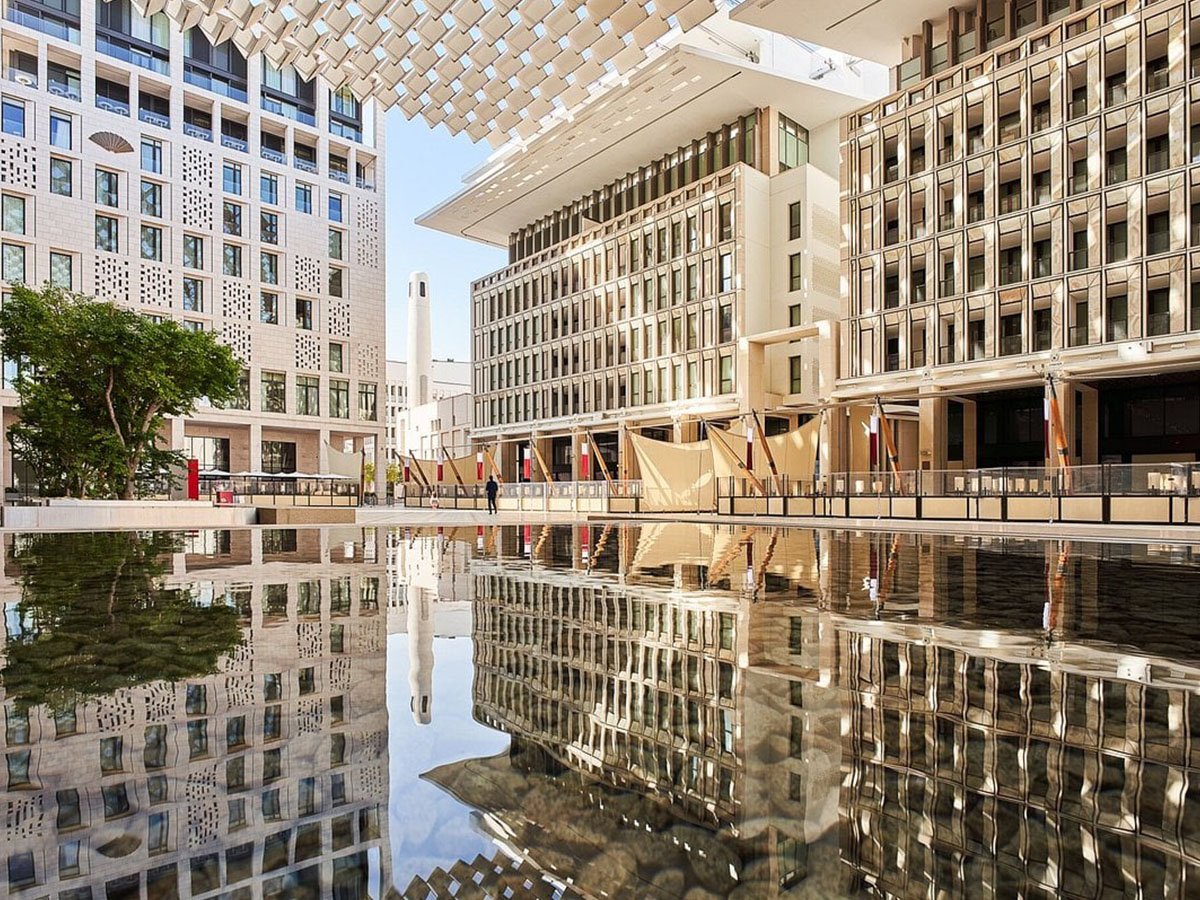
Msheireb Downtown Doha
1. The new cultural district is often born as a product, not a place
There is a new kind of urban boredom. It does not look neglected. It does not look poor. It does not even look badly designed. It often looks expensive, cinematic, and perfectly maintained. It has signature museums, destination restaurants, cultural logos, international architects, polished paving, and a press release full of words like innovation, community, creativity, and experience. Then you arrive, and something is missing.
The missing thing is not architecture. It is permission. Permission to linger without consuming. Permission to be local without being curated. Permission for disorder, repetition, small rituals, cheap coffee, bad music, informal gatherings, and the kind of unplanned human behavior that makes a district feel alive. The contemporary cultural district often wants the image of urban life without accepting the inconvenience of urban life.
This is where cultural strategy becomes more important than cultural packaging. A cultural district is not made by placing cultural buildings near each other. It is made by connecting institutions, artists, residents, workers, visitors, public space, access, education, food, transport, memory, and routine into a system. Without that system, the district becomes a luxury brochure with better lighting.
Project for Public Spaces has long argued that successful public places tend to share four qualities: they are accessible, active, comfortable, and sociable. The line is simple, but it is brutal. Many cultural districts pass the architectural test and fail the sociability test. They are easy to photograph and hard to inhabit.
The architecture of boredom begins when culture is asked to perform as branding before it is allowed to function as public life. Developers want the aura of the museum. Governments want soft power. Architects want the image. Operators want footfall. Sponsors want visibility. But the person walking through the district wants something much simpler. They want to feel that the place has a pulse when nothing is being launched.
For Core Art Strategies, this is the central issue. Art consultancy cannot be reduced to artwork selection. Art strategy has to enter earlier, at the level of identity, circulation, programming, commissioning, audience behavior, and long term cultural value. Otherwise the art becomes a necklace on a mannequin. Shiny, expensive, and dead from the neck down.
A place is not alive because something was built there. It is alive because people return when nothing is being announced.
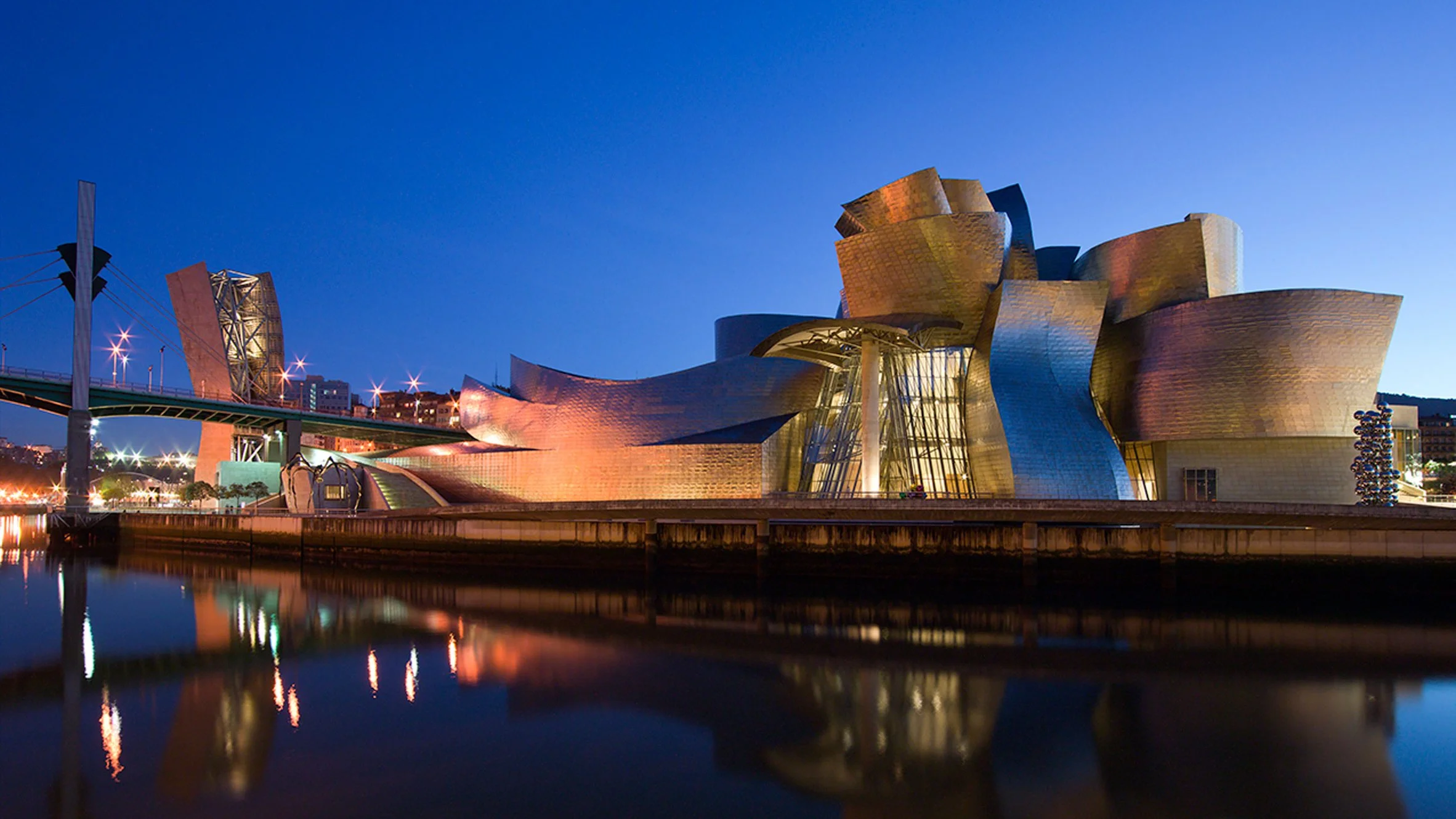
Guggenheim Bilbao by Frnak Gehry
2. Bilbao was copied badly because people copied the object, not the conditions
The Guggenheim Museum Bilbao is the ghost behind nearly every ambitious cultural district built since the late 1990s. It gave mayors, developers, and cultural ministers a seductive formula: build an extraordinary cultural object and the city will become visible. The phrase Bilbao effect became shorthand for cultural investment plus spectacular architecture producing economic transformation.
The problem is that the formula was never that simple. Bilbao worked not only because Frank Gehry produced a titanium icon. It worked because the museum became part of a larger urban, infrastructural, political, and economic repositioning. The city was dealing with industrial decline. Public transport, the riverfront, the airport, and the civic image of the city were all part of a wider transformation. The building was a catalyst, not a magic wand.
Yet the world did what the world always does when money meets vanity. It extracted the most visible component and ignored the harder system underneath. Instead of asking how culture can participate in a city’s lived economy, many projects asked for an icon. The result was a global outbreak of spectacular buildings with weak ecosystems around them.
The Guardian once raised the uncomfortable question around Bilbao itself: where are the local galleries, the music, the graffiti, the skateboarders? That question matters because cultural life is not the same as cultural tourism. Tourism can fill hotel rooms while the local cultural ecosystem remains fragile. A museum can become famous while the city around it becomes a stage set for visitors.
This does not mean Bilbao failed. It means Bilbao was misunderstood. The lesson is not that every city needs a signature museum. The lesson is that cultural investment only becomes transformative when it is tied to infrastructure, local production, civic access, and programming that outlives the opening week.
For art consultancy and cultural strategy today, Bilbao should be treated less as a model to imitate and more as a warning against lazy translation. An artwork, museum, or cultural district cannot carry meaning alone. The surrounding system must be designed to produce return, friction, memory, and use. Otherwise the icon becomes a selfie device with a gift shop attached.
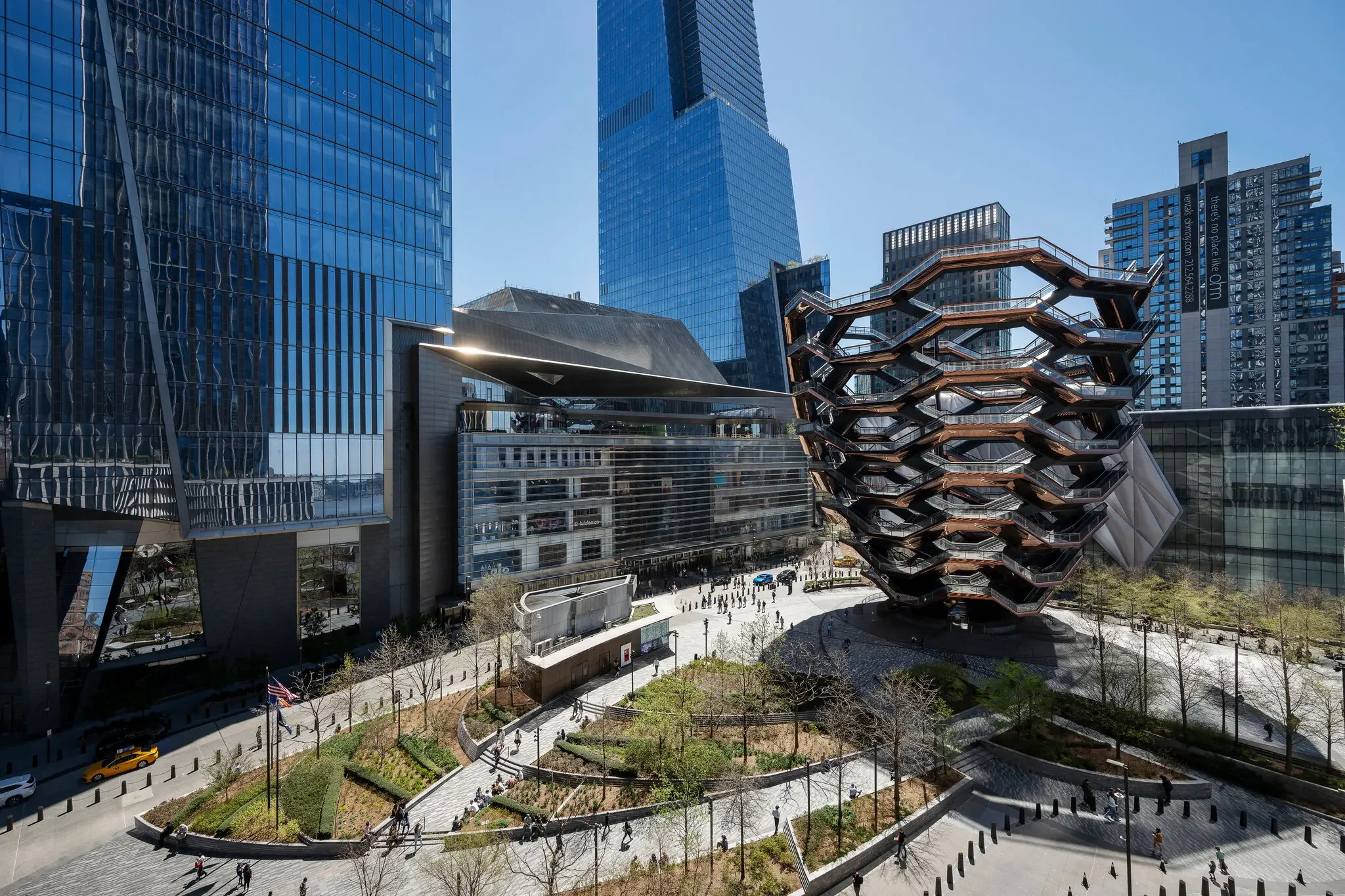
Hudson Yards - New York
3. Hudson Yards: culture inside the luxury machine
Hudson Yards in New York is one of the clearest case studies in the architecture of boredom because it is not culturally poor. It has The Shed, a technically ambitious arts center. It has Vessel, a monumental climbable structure. It has public space, high end retail, luxury residential towers, restaurants, observation decks, and an enormous amount of investment. Architectural Digest describes Hudson Yards as a 28 acre mixed use development and the biggest private real estate development in United States history.
On paper, it has all the ingredients. In atmosphere, it reveals the problem. The district often feels less like a neighborhood than a controlled demonstration of urbanity. It offers the appearance of public life while constantly reminding the body that the place is managed, surveilled, priced, and formatted. You can move through it, consume in it, and photograph it. The harder question is whether you can belong to it.
The Shed is a fascinating object. Designed as a flexible cultural machine, its Bloomberg Building is described by Diller Scofidio + Renfro as a 200,000 square foot structure that can physically transform to support ambitious artistic work. This is serious architecture and serious engineering. But even the most flexible cultural building cannot resolve a district whose emotional code is already written by luxury retail and real estate finance.
Frieze was sharp about this contradiction, describing The Shed as technically innovative while questioning the radicalism of an arts institution located beside luxury towers, retail, and a privately controlled public realm. That critique is not anti architecture. It is anti naivety. Culture cannot simply be inserted into a high value development and expected to neutralize its social atmosphere.
Hudson Yards exposes a broader condition: cultural programming is often used to humanize environments whose financial logic has already removed most of the human mess. The place wants artists, but not unpredictability. It wants public space, but not public behavior. It wants diversity as content, but not as ownership. That is how boredom enters. Not through emptiness, but through over control.
For Core Art Strategies, the lesson is direct. Art strategy must challenge the operating logic of a project, not merely decorate it. If the cultural layer arrives after the commercial identity has already been fixed, the art will serve the commercial identity. It may still be impressive. It may still be expensive. But it will not make the place emotionally intelligent.
4. West Kowloon and Saadiyat: scale is not the same as rhythm
West Kowloon Cultural District in Hong Kong and Saadiyat Cultural District in Abu Dhabi are far more complex than the usual lazy criticism of mega projects allows. Both contain major institutions, large ambitions, and serious cultural infrastructure. Both also show the central tension of the contemporary cultural district: how do you convert concentration into life?
WestK describes itself as one of the largest and most ambitious cultural projects in the world, planned as a cultural quarter on forty hectares of reclaimed land beside Victoria Harbour, with theatres, performance spaces, museums, twenty three hectares of public open space, and a two kilometre waterfront promenade. M+ has become a major museum of contemporary visual culture, and the district includes performance venues, parkland, and public programming.
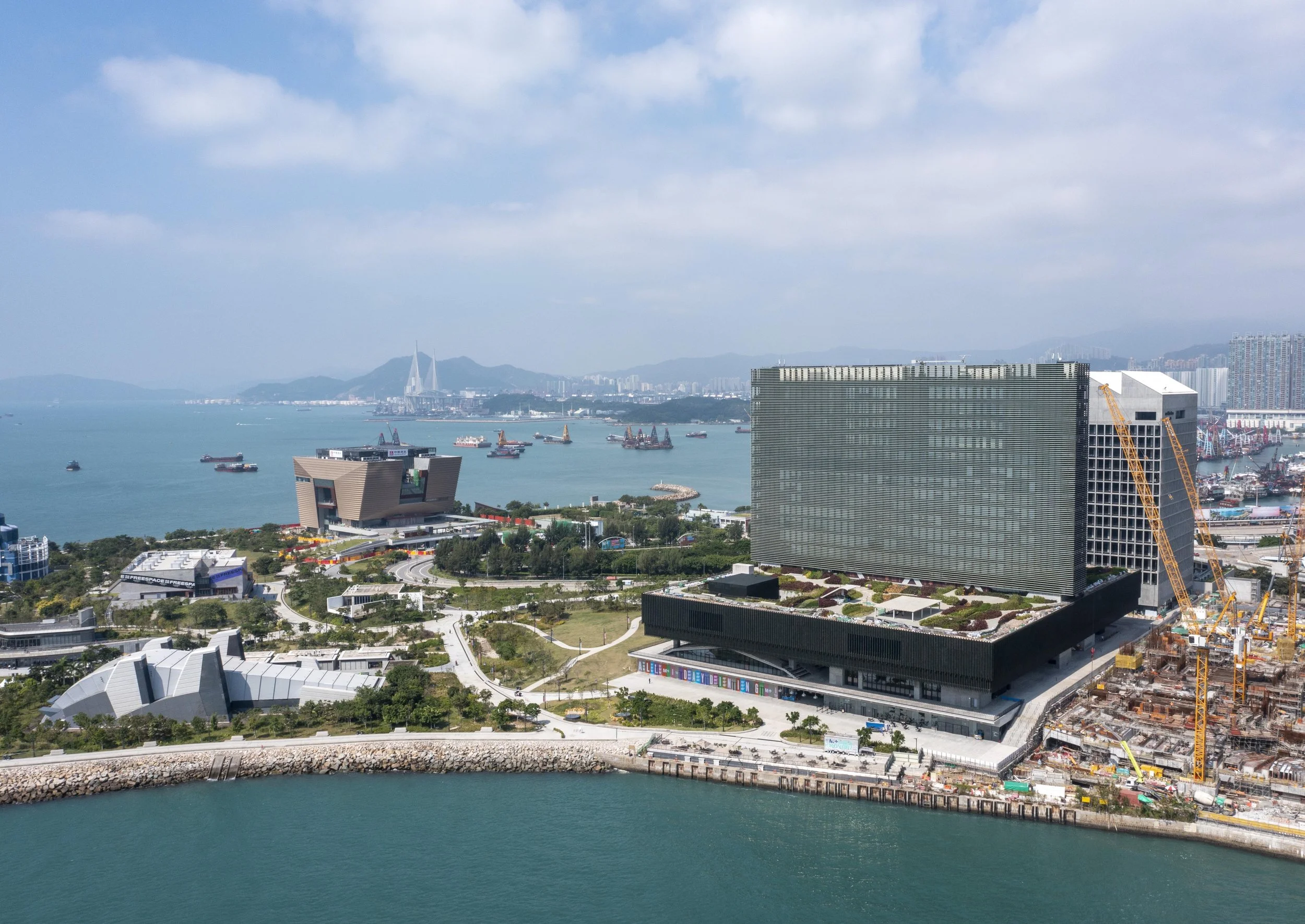
West Kowloon Cultural District
Yet the very scale that makes West Kowloon impressive also creates a management burden. Artforum reported in 2024 that the district faced a funding crisis after construction delays, cost surges, and the Covid crisis increased losses. The point is not that West Kowloon is boring. The point is that cultural districts are not finished when the buildings open. They require long term operational stamina, public rhythm, affordable access, institutional coordination, and programming depth. A district is an organism. It keeps asking to be fed.
Saadiyat raises a different but related question. Abu Dhabi’s cultural district brings together Louvre Abu Dhabi, Zayed National Museum, Natural History Museum Abu Dhabi, teamLab Phenomena Abu Dhabi, and other major cultural institutions. This is not small thinking. It is an attempt to build cultural capital at metropolitan scale, tying art, heritage, science, religion, tourism, education, and national identity into a single island narrative.
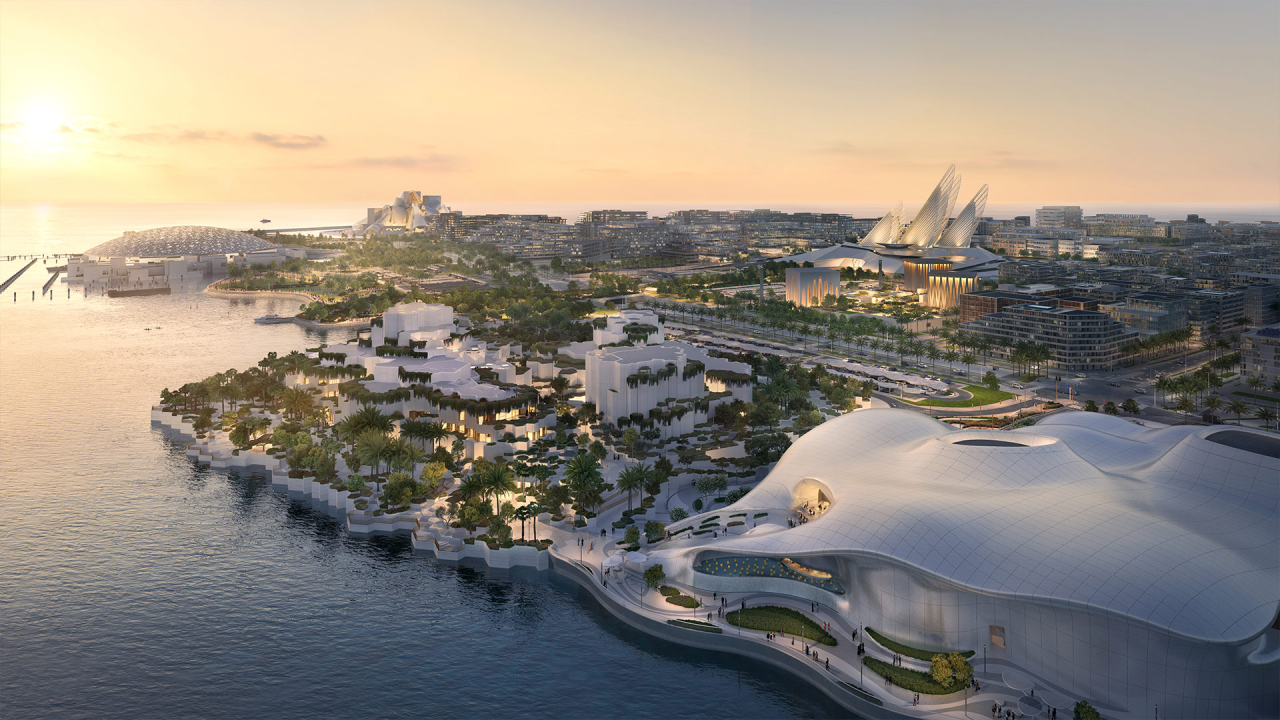
Saadiyat cultural capital Abu Dhabi
The risk for any place of this ambition is not lack of content. The risk is distance between cultural capital and cultural life. A museum can be extraordinary while the surrounding district remains episodic. People visit, consume, admire, and leave. The deeper challenge is to create repetition. School trips that become personal memories. Artists who return. Residents who use the place outside ticketed time. Students who feel ownership. Local rituals that were not invented by a marketing department.
The Gulf is currently one of the most important regions in the world for this question because cultural investment is happening at speed and scale. Saudi Arabia, Qatar, and the UAE are building museums, public art programs, heritage districts, biennials, festivals, luxury hotels, and new urban destinations. The opportunity is enormous. So is the danger of cultural sameness. If every district is polished into the same international language of stone, glass, water, lighting, branded coffee, and monumental sculpture, then even excellence begins to feel generic.
5. Why expensive cultural districts become boring
Boredom is not the absence of things. It is the absence of consequence. A district becomes boring when nothing feels at stake. The art is safe. The space is controlled. The restaurants are interchangeable. The public realm is photogenic but socially thin. The program is busy but not rooted. The visitor is impressed but not changed.
The first cause is late cultural thinking. Art is brought in after the architecture, after the brand identity, after the budget structure, after the public realm, and after the commercial mix. By then, culture has no structural power. It can only decorate decisions that have already been made. This is why art consultancy must be involved early. Not because consultants need a bigger chair at the table, but because the project loses cultural intelligence when art is treated as an end stage procurement item.
The second cause is icon addiction. The icon promises instant visibility, but visibility is not attachment. Cities have learned to build objects that travel well on Instagram but do not necessarily hold civic meaning. An icon can announce ambition. It cannot, by itself, create memory. Memory requires repetition, use, care, conflict, and emotional ownership.
The third cause is the sterilization of risk. Too many cultural districts want art that looks contemporary without creating discomfort. They want artists, but not politics. They want public engagement, but not difficult publics. They want local identity, but only after it has been cleaned, translated, and made safe for investors. This creates the deadliest kind of cultural space: one that claims relevance while refusing friction.
The fourth cause is the collapse of difference. A luxury cultural district in one city increasingly resembles a luxury cultural district in another city. The same planting strategy. The same monumental lobby. The same programmable plaza. The same international restaurants. The same language of immersive experience. The same art fairs, commissions, and VIP preview rituals. When every place wants to look global, many places end up feeling nowhere.
The fifth cause is operational laziness disguised as polish. A district needs more than seasonal events. It needs an ecology of use. Archives, residencies, studio visits, schools, commissions, talks, public art, affordable food, shade, seating, transport, late night access, informal gathering, neighborhood partnerships, and reasons to return that are not dependent on spectacle. Culture has to become a habit, not a headline.
6. The antidote is cultural strategy, not more decoration
The solution is not to make cultural districts less ambitious. The solution is to make them more intelligent. Ambition is not the problem. Emptiness is. Investment is not the enemy. Misallocated meaning is.
A serious art strategy begins with questions that are usually asked too late. What should this place stand for? Who is it for when the tourists leave? What cultural memory does it inherit? What social behaviors does it allow? What artistic risks can it hold? Which local voices are structurally involved, not cosmetically quoted? How will the district remain alive between openings? What will people do there on an ordinary Tuesday?
These questions are not soft. They affect asset value, brand distinction, visitor return, media relevance, institutional credibility, and long term cultural capital. A hotel that understands culture becomes more than a room inventory. A corporate headquarters that understands art becomes more than a lobby. A real estate development that understands public art becomes more than rentable surface. A cultural district that understands strategy becomes more than a cluster of buildings.
For Core Art Strategies, art consultancy means building that intelligence into the project. It means reading the site before selecting the artwork. It means treating public art as infrastructure, not ornament. It means designing commissioning systems that connect artists to architecture, audiences, and place. It means translating between developers, artists, institutions, operators, curators, fabricators, and the public without flattening the work into corporate politeness.
The next generation of cultural districts in the Gulf, Europe, Asia, and the Americas will not be judged only by the architects they hire or the artists they acquire. They will be judged by whether people can feel anything there after the opening photographs disappear. They will be judged by whether children remember them, artists use them, residents defend them, and visitors return without being told to.
The architecture of boredom is expensive because it mistakes attention for attachment. It believes that if a place is visible enough, it will matter. But places matter for older reasons. They matter because they hold memory. They allow encounter. They produce identity. They give people a role inside them. They become part of daily life, not just part of a city’s campaign.
A cultural district should not feel like a showroom for civic ambition. It should feel like a place where ambition has been made vulnerable to life. That is harder to design. It is also the only thing worth building.
Core Art Strategies builds art programs as cultural systems, not decorative afterthoughts. For art consultancy, cultural strategy, public art, and site-specific commissions across hospitality, real estate, corporate, and cultural projects, visit coreartstrategies.com