
Contemporary Arab Art and the Edited Image
Contemporary Arab art is at its best when it refuses to behave.

Not when it “celebrates identity.” Not when it decorates a lobby with respectable abstraction. Not when it provides a harmless regional accent for an international hotel. Not when it produces the kind of tasteful beige authenticity that makes curators, developers, and cultural ministries feel safe in the same room.
Arab art becomes serious when it attacks the edit.
The edited family image. The edited national image. The edited class image. The edited religious image. The edited cultural image. The official photograph. The missing archive. The censored body. The polished city. The obedient heritage. The modernity brochure. The state-approved memory. The private shame dressed as public morality.
This is why the most important contemporary Arab artists are rarely just “expressing themselves.” That phrase is too small. They are often working against systems that decide what may appear and what must remain invisible.
Walid Raad does not simply make work about Lebanon’s civil war. He makes work about the impossibility of trusting the image after war. In the Lebanese context, the archive is never innocent. It is full of gaps, inventions, silences, political edits, sectarian amnesia, and private memories pretending to be public history. Raad’s work understands that the postwar Arab image is not only damaged; it is administratively damaged. It has been filed, misplaced, fabricated, narrated, denied, and professionally confused.
This is precisely why his work matters to this argument. The Arab public image says: here is the official version. Raad replies: who produced the file?
Akram Zaatari and the Arab Image Foundation push the question differently. They do not treat photographs as nostalgic objects. They treat them as unstable social evidence. A family portrait, a studio photograph, a body pose, a military image, a lover’s picture, a passport photo, a staged masculinity, a private gesture accidentally preserved—these are not just images. They are records of how people wanted to be seen, and sometimes records of what society later wanted to forget.
This is the part many people miss. The archive is not the opposite of the edited image. The archive is where the edit can be caught.
Lebanon is especially important here because it is a country addicted to both memory and denial. It remembers everything socially and resolves almost nothing politically. Its images are everywhere: martyrs, leaders, missing persons, wedding portraits, destroyed buildings, luxury interiors, port explosions, family albums, militia iconography, gallery openings, nightclub photographs, passport queues, and real estate renders of futures nobody believes in. Lebanese contemporary art often works inside this contradiction: the country is visually excessive and institutionally evasive.
Joana Hadjithomas and Khalil Joreige understand this. Their work is not interested in the image as proof. It is interested in the image as suspicion. What does the image show? What does it refuse? What fiction did it help stabilize? What national fantasy did it interrupt? In their practice, Lebanon is not a subject to be illustrated but a machine that produces missing persons, missing histories, missing futures, and images that arrive already contaminated.
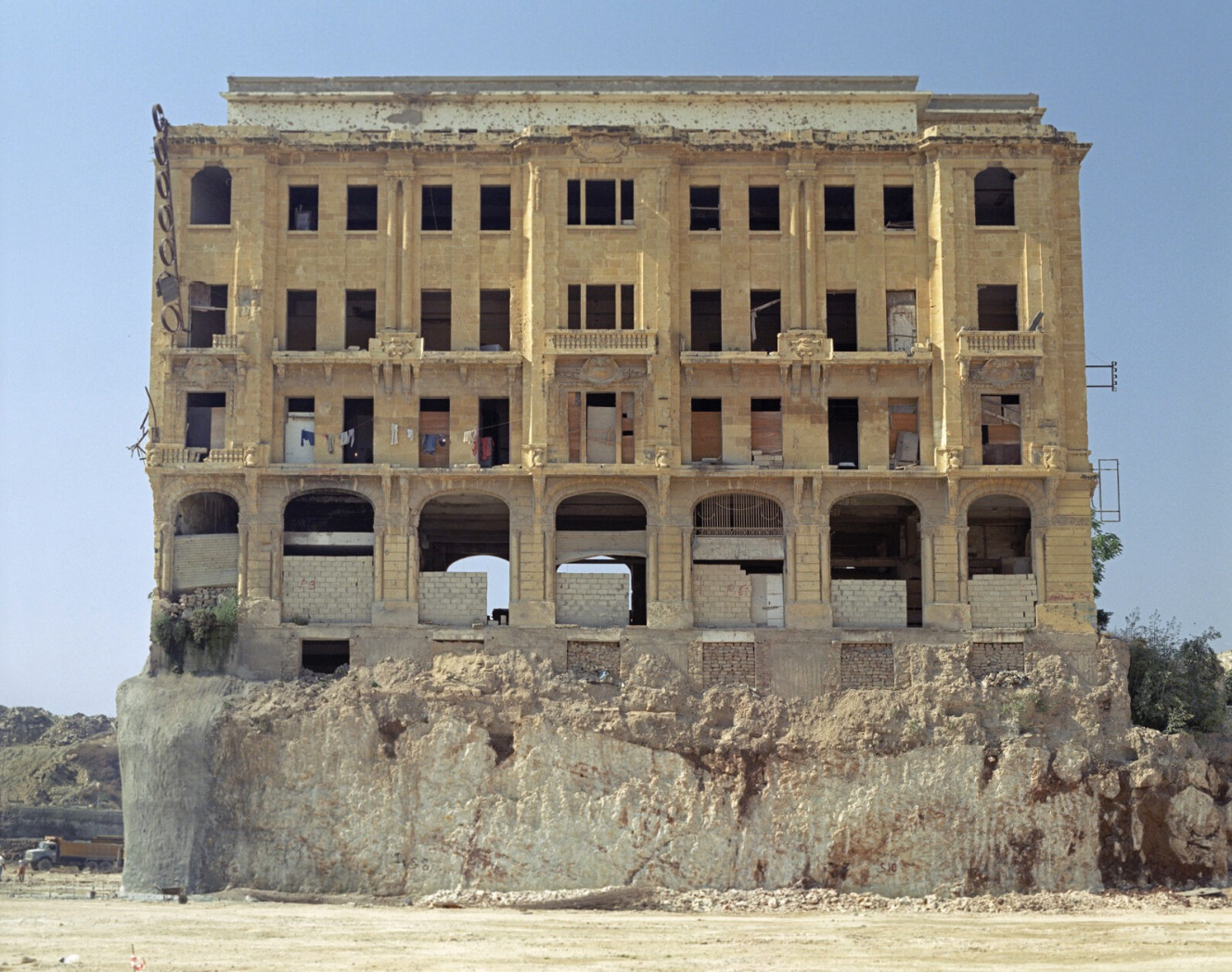
“We decided to let them say ”we are convinced,” twice”, ©Walid Raad,
That is what serious Arab contemporary art can do. It does not give the region a prettier face. It interrogates the face.
Mona Hatoum does something even more brutal. She takes the spaces that Arab public image loves to sentimentalize—home, body, belonging, domesticity, exile—and makes them unstable. In much Arab social language, “home” is treated as sacred. The family home, the homeland, the motherland, the kitchen, the room, the bed, the table. Hatoum’s work understands that these spaces can also be sites of pressure, confinement, surveillance, displacement, and violence. She does not allow home to remain decorative.
This is important because Arab culture often uses the domestic image as moral theater. The good family. The good mother. The respectable woman. The protected interior. The warm table. The beautiful home. The generous host. The untouched private space. Hatoum punctures that fantasy. She turns domesticity into threat. She understands that the room is never just a room when the body inside it is being watched, judged, displaced, or controlled.
In the Gulf, the edited image operates differently. It is cleaner, larger, more architectural. It speaks the language of development, cultural diplomacy, national vision, heritage revival, creative economy, and global arrival. This is why Hassan Sharif remains so important. His work refuses the obvious seduction of luxury image-making. It does not beg to look expensive. It does not perform heritage for tourists. It does not decorate national ambition. It uses common materials, repetitive labor, accumulations, absurd systems, and conceptual stubbornness.
Sharif is crucial because he offers a Gulf art history that is not dependent on spectacle.
That matters now because Gulf culture is being visually overproduced at extraordinary speed. Museums, biennials, public art commissions, cultural districts, artist residencies, desert installations, design weeks, art fairs, and branded heritage projects all participate in a new regional image. Some of this is serious. Some of it is necessary. Some of it is historically overdue. And some of it is prestige choreography with a better press release.
The danger is not that the Gulf is investing in culture. The danger is that culture may be asked to perform modernity without disturbing power.
Ahmed Mater is important here because his work deals with Saudi transformation from inside the visual tension of religion, urban development, collective memory, and national change. In a country where the public image is being rewritten at historic speed, Mater’s work asks what happens to the unofficial image: the image of construction, pilgrimage, infrastructure, spiritual gravity, medical observation, urban acceleration, and social mutation. His work is not anti-Saudi. It is more serious than that. It refuses the stupidity of both propaganda and outsider cliché.
Manal AlDowayan brings another essential layer: who is allowed to become publicly visible during transformation? Her work on Saudi women’s voices is not simply representation. It touches the politics of emergence itself. When a society changes, visibility is never evenly distributed. Some bodies are invited into the new image because they help prove reform. Others remain controlled, edited, or translated into acceptable form. The question is not only “are women visible?” The question is: visible as what, under whose frame, and at what cost?
This is the serious question cultural institutions often avoid because it ruins the mood.
The same problem appears across the region. Arab art is constantly asked to perform identity without making identity difficult. It is asked to be political, but not too political. Local, but globally legible. Critical, but fundable. Arab, but not angry. Feminist, but elegant. Historical, but not accusatory. Religious, but not dangerous. Queer, perhaps, but preferably in a way that can travel to a European biennial before it has to deal with the family WhatsApp group.
This is where the Instagram painter enters the scene like a perfectly timed symptom.
The Instagram painter is not the enemy. The enemy is the market that made this figure inevitable.
In the Arab art economy, visibility often rewards the work that can be understood before it is encountered. The artist must be readable. The canvas must photograph well. The process must look dramatic. The studio must signal seriousness. The caption must perform emotion. The collector must feel safe. The developer must feel cultured. The hotel must feel unique. The audience must feel intelligent without being challenged. The work must say “identity” but not ask too many questions about who benefits from identity once it becomes décor.
This is why so much visible Arab painting today feels like luxury therapy.
A face, a veil, a horse, a calligraphic gesture, a woman dissolving into flowers, a man carrying ancestral trauma in tasteful earth tones, a gold leaf wound, a blue abstraction named after memory, a canvas large enough for a villa staircase and vague enough not to offend the mother-in-law. It is all very moving, apparently.
This is not an argument against beauty. Beauty is not the problem. Beauty becomes the problem when it is used as anesthesia.
The commercial Instagram artist understands the edited Arab public image perfectly. They know the work must look expressive but not unstable. Contemporary but not alienating. Emotional but not embarrassing. Cultural but not specific enough to require accountability. Expensive but spiritually sincere. Personal but available in multiple sizes.
This is why the market loves them. They provide the image of depth without the inconvenience of depth.
Collectors also play their part. Many Arab collectors do not buy art; they buy confirmation. Confirmation of taste. Confirmation of class. Confirmation of cultural arrival. Confirmation that they are not merely rich, but refined. The artwork becomes a certificate of sophistication. This is especially visible when art enters the home as a social prop: the large painting behind the dining table, the sculpture near the entrance, the Arabic calligraphy with just enough abstraction to feel contemporary, the artwork chosen because it photographs well during Ramadan dinners and private viewings.
Again, the issue is not that people buy decorative art. People are allowed to enjoy things. The issue is when the entire cultural field bends toward the decorative because difficulty is socially inconvenient.
Serious Arab contemporary art does the opposite. It does not confirm the buyer. It unsettles the room.
Dia al-Azzawi’s political work does not allow history to become décor. It insists that massacre, displacement, and collective violence cannot be softened into aesthetic memory. The image becomes accusation. It does not politely ask to be admired. It stands there like evidence.
Khaled Hafez’s work, in an Egyptian context, is useful because it understands that contemporary Arab image culture is made from contradictory icons: Pharaonic memory, military power, pop culture, religion, consumerism, revolution, masculinity, advertising, and global media. Egypt is not visually poor; it is visually overdetermined. Its public image has been edited by empire, nationalism, cinema, religion, bureaucracy, military symbolism, tourism, and street politics. The result is not one image but a fight between images.
This is what contemporary Arab art can reveal better than sociology sometimes: the region is not suffering from lack of image. It is drowning in images that refuse to tell the full truth.
The task of serious art is not to add another attractive image to the pile. It is to show the cut.
Who was removed? Who was renamed? Who was made symbolic? Who became decorative? Who was allowed to speak only after becoming useful? Who became visible only when their visibility served a cleaner story?
That is the link between contemporary Arab art and the edited public image.
The weak artwork participates in the edit.
The serious artwork exposes the edit.
The decorative artwork helps the family, the state, the collector, the developer, or the institution look better.
The serious artwork makes looking better insufficient.