
The Closed Circle
Why Lebanon’s Galleries Keep Showing the Same Artists
At 33, Nadine Kanawati had a bachelor’s and a master’s degree in fine arts from the Lebanese University, but had never participated in a professional exhibition. Her debut came at Cub Gallery’s inaugural show, reported by The National in January 2018. Her canvases incorporated shredded car tyres, a material she connected to street protest. “It’s the first step that is never taken,” she said. [1]
That is a more revealing place to begin than a crowded opening. Training had happened. Work had happened. Professional visibility had not. A functioning art ecosystem should be able to connect those stages without requiring the artist to solve the entire business of recognition alone.
Cub’s manager, Christopher Rizkallah, described graduates having to establish a name abroad before gaining access to Lebanese galleries. The initiative—a partnership between FFA Private Bank and Beirut Art Residency—offered an alternative. Its first exhibition included 17 artists from six universities. [1]
Eight years later, the institutional language is strikingly direct. Nayla Tamraz’s February 2026 National Visual Arts Forum report, based on consultation with 60 stakeholders, says international participation “often depends on private networks or privileged galleries, distorting fair representation.” It also identifies geographic concentration and language barriers. This is a sector consultation produced within the Ministry of Culture’s forum initiative, not merely a disappointed artist’s complaint. [2]
Together, these accounts identify the problem more precisely than the familiar accusation that galleries show their friends. The bottleneck is access to the mechanisms that make an artist credible: sustained attention, presentation, interpretation, introductions and subsequent opportunities. When access to those mechanisms depends heavily on already possessing their results, reputation starts replacing discovery.
Established artists deserve continued representation. But continuity within a roster and renewal across an ecosystem are different responsibilities. A gallery may fulfil the first while the wider field fails at the second. The question is not whether a familiar name should appear again. It is whether unfamiliar work has a credible route to being seen seriously in the first place.
The first exhibition is an economic event
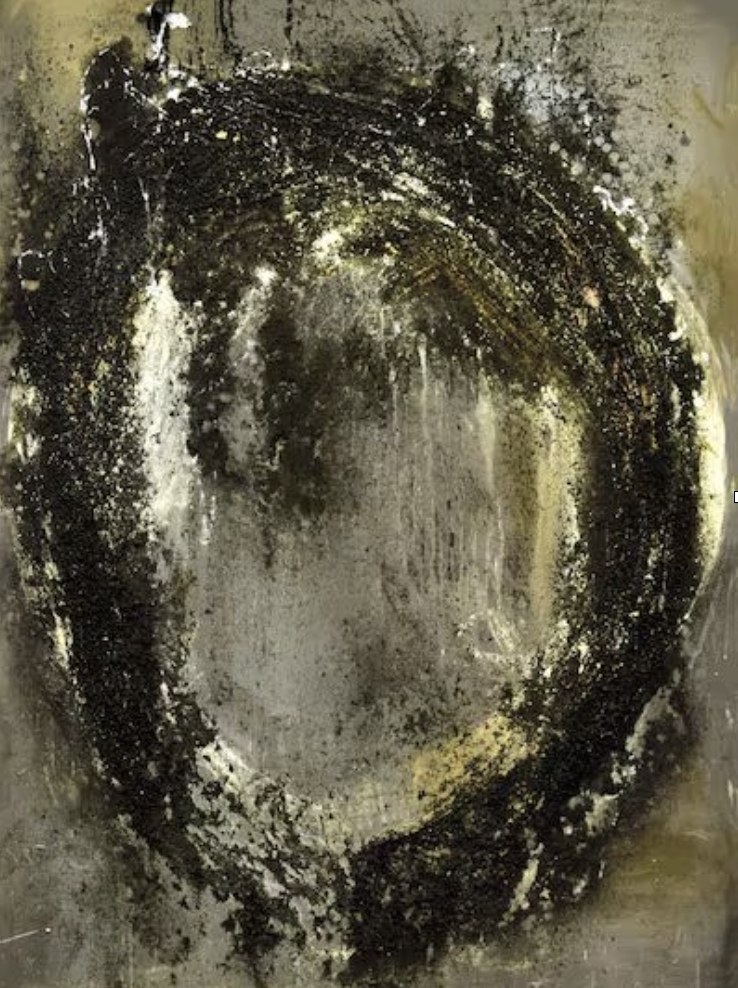
Nadine Kanawati, Vicious Circle, shown in Cub Gallery’s inaugural exhibition, Beirut, 2017–18. Photograph: courtesy Cub Gallery / Collette Mahoney, via The National. The work turns a material associated with protest into a dense, tactile surface.
Look at the photographed work: circles do not float neatly on an untouched ground. Their rough material catches light unevenly; repetition becomes physical pressure. One need not declare the painting a masterpiece to recognise that there is something here for a curator to investigate. Discovery begins with that willingness to look before a reputation tells the viewer what to value.
The practical importance of a debut exceeds the days an exhibition remains open. It creates documentation, a public record, a possible review and a reason for another professional to visit. These become evidence for the next application or invitation. The artist without an exhibition therefore lacks more than a room: they lack the documents through which the system recognises previous participation.
This is how an apparently neutral preference for experience can reproduce exclusion. Each organisation asks for a record that another organisation must first supply. No explicit ban is necessary. Everyone can believe they are protecting quality while collectively withholding the opportunity through which quality becomes publicly legible.
There is also an uncomfortable transfer of labour. If the gallery’s threshold is a fully resolved body of work, polished documentation and an existing audience, the artist has financed the uncertain development period before the gallery arrives. Some can do so through savings, family support or another job. Others cannot. A selection process that sees only the finished portfolio cannot tell how much abandoned work its threshold has already filtered out.
The circle was visible before the banking collapse
The recurring cast is not a recent invention. Reviewing Art Now in Lebanon at Darat al-Funun in 2008, Kaelen Wilson-Goldie identified a familiar “The Group” in an exhibition curated by Andrée Sfeir-Semler: artists including Walid Raad, Akram Zaatari, Rabih Mroué, Marwan Rechmaoui and Lamia Joreige. She connected the lineup to earlier exhibitions by Catherine David and Suzanne Cotter. Her review also valued the show’s regional educational role and its inclusion of younger practices. [3]
The historical significance is the difference between a group of important artists and the authority to stand for an entire scene. A recognisable cluster makes international programming easier: curators inherit references, institutions inherit explanations, and audiences encounter work already situated within a critical history. Those are real achievements. They can also make the next selection start from the previous selection rather than from the present field.
This produces an aesthetic risk as well as a social one. Once certain approaches become the easiest way to recognise contemporary art from Lebanon, work that uses another vocabulary may require more explanation to enter the conversation. The problem is not that artists investigate memory, violence or political history. It is the possibility that a successful account of one generation becomes an advance description of what later artists are expected to make.
A national label magnifies this effect. A commercial gallery can reasonably present a distinctive programme. An exhibition understood as a window onto Lebanon makes a larger claim. The narrower the selection, the more necessary it becomes to explain the view’s limits. Otherwise a partial account gains the authority of a complete cultural picture.
This distinction also changes where criticism should be directed. Blaming individual artists for being selected confuses beneficiaries with decision-makers. The important questions concern commissioning, research and circulation: who is asked to recommend artists, whose studios are visited, and whether successive curators independently widen the field or keep drawing on the same established map.
What a gallery calendar actually reveals
A bounded count gives the argument something firmer than familiarity. In Marfa’s published archive, 13 solo exhibitions opened at its Beirut gallery between 1 January 2023 and 8 September 2026. Nine slots went to artists with an earlier solo recorded there; four were first recorded solos at the gallery—Maysam Hindy, Seta Manoukian, Mohamad Abdouni and Majd Abdel Hamid. The count excludes group shows and overseas presentations, and uses opening dates. [4]
That is substantial continuity, alongside demonstrable entry. It is not a national market statistic. Nor does a first solo at one gallery mean an artist is emerging: an established career can be new to a particular venue. Counting unfamiliar names without checking their histories would overstate discovery just as counting all returns as exclusion would overstate closure.
The distinction matters because several different achievements can look identical on a calendar. Recruiting an artist established elsewhere, returning an overlooked senior artist to local attention, and supporting an unrepresented graduate are all potentially valuable. They do not solve the same problem. An institution should be able to say which kind of access it is expanding, rather than allowing the word “new” to do all the work.
A return can itself be evidence of good practice. Hindy’s first solo at Marfa in 2023 was followed by another in 2025. [4] A debut followed by abandonment would be a weaker model of support. The appropriate test therefore has two parts: whether artists can enter, and whether those who enter receive enough continuity to develop. Discovery without follow-through can be as superficial as representation without discovery.
The calendar also makes scarcity concrete. A solo slot uses time, space, installation labour, communication and collector attention. Even when an exhibition is excellent, its allocation has an opportunity cost. The fair question is how a programme distributes that scarce capacity over time—not whether any individual artist deserves to lose it. Serious criticism asks for an account of the balance, then examines whether the explanation matches the record.
What long-term representation makes possible
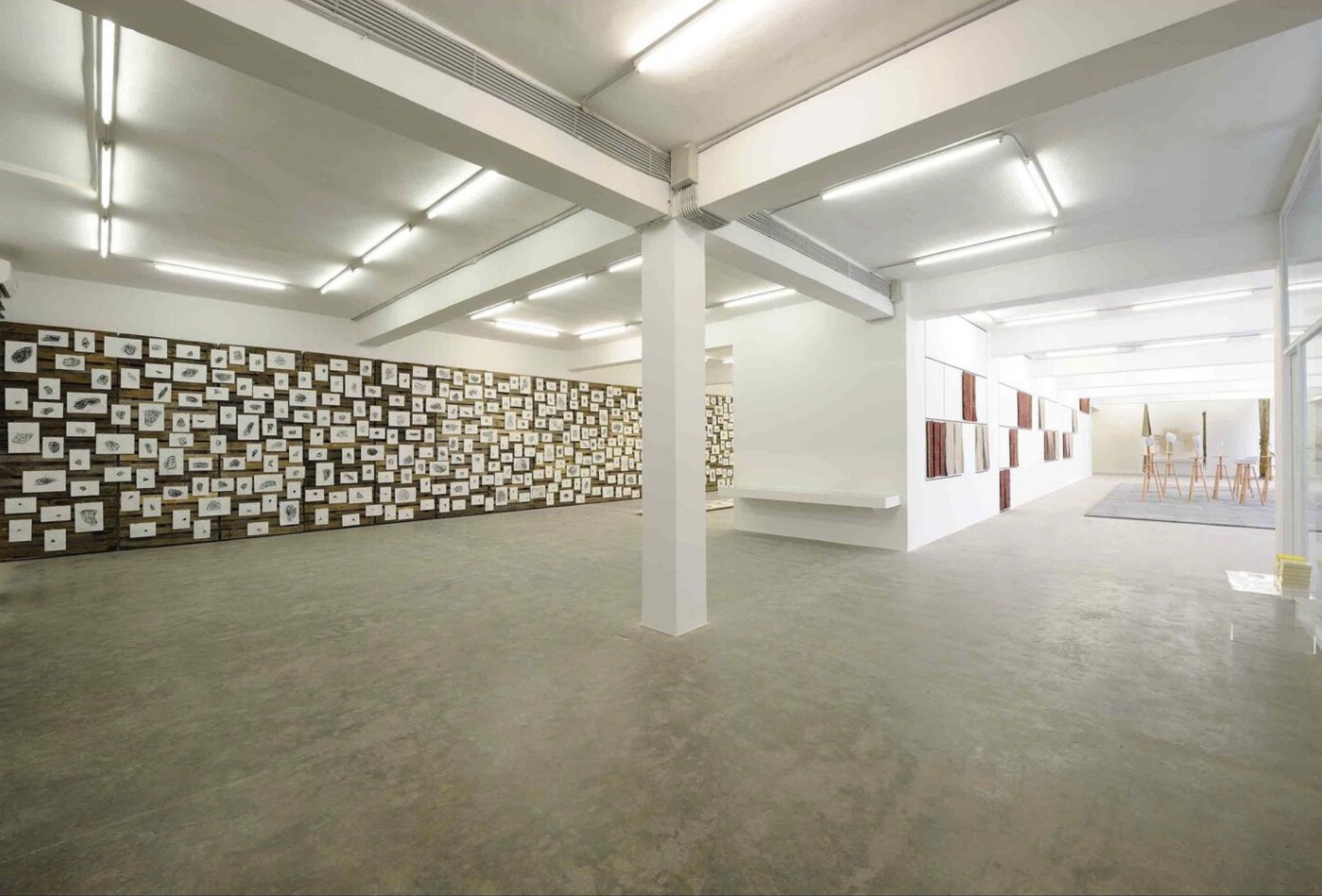
Rayyane Tabet, FRAGMENTS, installation view, Sfeir-Semler Gallery, Beirut, 2018. Image from the gallery’s exhibition archive; courtesy the artist and Sfeir-Semler Gallery. Serial works occupy an extended architectural space, making sustained production visible.
Rayyane Tabet is a useful test of the argument because his history resists an easy accusation. Sfeir-Semler’s record places his first group exhibition with the gallery in 2006, before his 2013 solo. Its account of FRAGMENTS traces the project through Marrakech, Berlin and other European institutions before its 2018 Beirut presentation. [5] This is not a simple story of a Lebanese gallery waiting for a foreign institution to discover an already finished artist.
In the installation photograph, the repeated units ask to be seen across a room rather than consumed as one isolated object. This kind of presentation needs more than wall space for a weekend. It depends on research, fabrication, transport, installation and enough institutional confidence to sustain a project through multiple stages. An established relationship can make such ambition possible.
The serious demand is to extend that possibility. If long-term support improves the work of recognised artists, it should not be treated as unnecessary for artists whose practices are still becoming clear. A system that funds development only after proof of development has already arrived has reversed the purpose of patronage.
Foreign recognition can bring resources, technical knowledge and audiences that a local venue cannot supply alone. International exchange should not be confused with cultural surrender. The restrictive point comes when exchange turns into a prerequisite: when going abroad is the effective admission fee for being assessed at home. Artists able to travel then acquire a practical advantage over equally committed people whose circumstances keep them local.
There is a further dependency hidden in this arrangement. A local scene can become an importer of other institutions’ judgments about its own artists. The work returns with a biography that makes it easier to sell, exhibit or explain. What looks like confidence in quality may actually be confidence that someone else has already assumed the first risk. Curatorial discovery requires an institution to make that judgment while consensus is still absent.
A busy market is not necessarily a healthy ecosystem
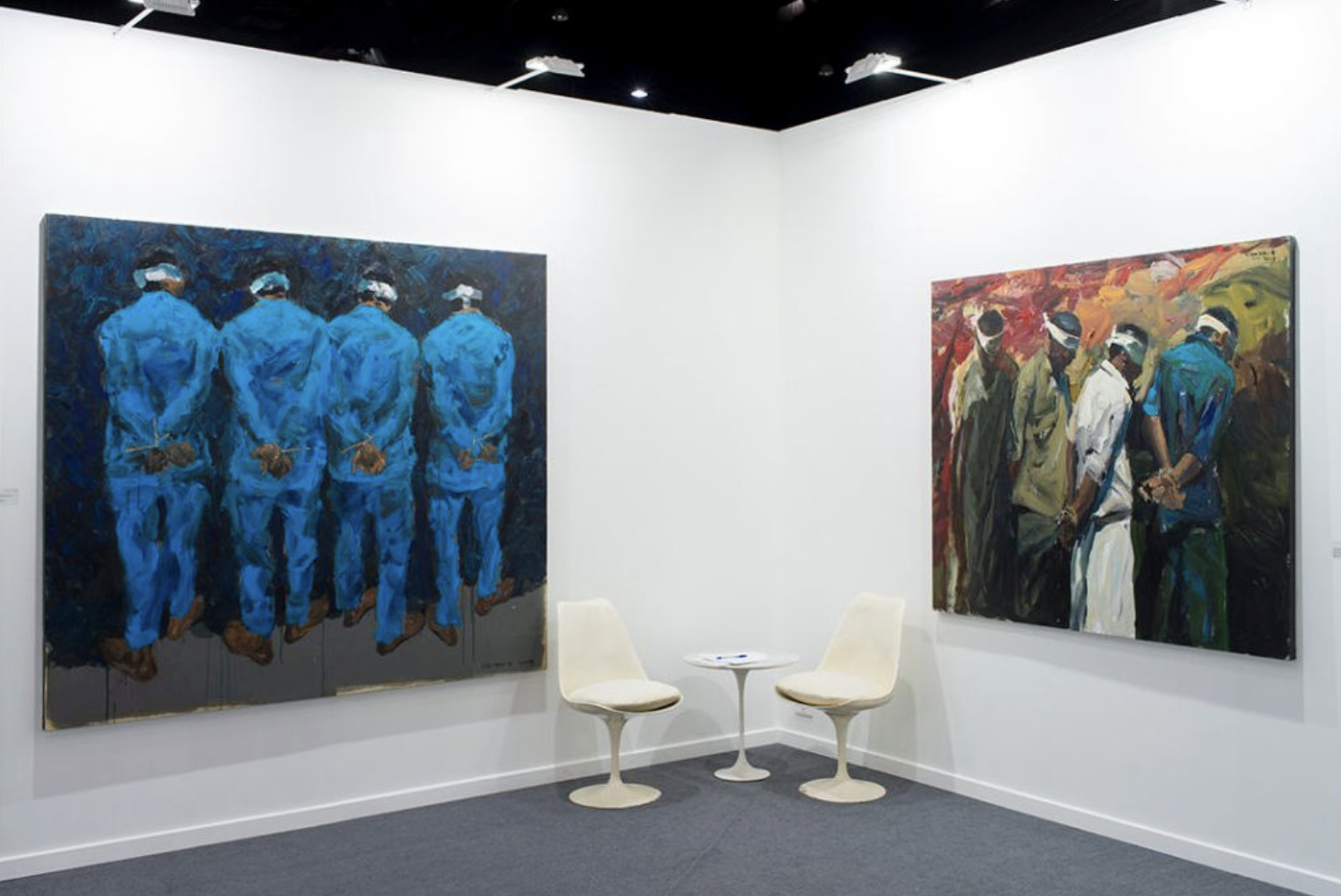
Agial & Saleh Barakat Gallery’s booth at Beirut Art Fair, 2019. Photograph: Paul Hennebelle, via Artnet News. The image documents a commercial presentation, not a transaction; individual artwork identities are not supplied here.
A photograph of a fair booth proves that work was presented. It cannot prove what sold, who was paid, or whether the income financed another artist’s development. The distinction becomes crucial in Lebanon, where a market can appear active while the conditions for making art deteriorate.
Artnet’s September 2019 reporting illustrates the need for precision. Ayman Baalbaki’s Piccadilly Theatre carried a $250,000 asking price; that is not a verified sale. The report separately described sales of his works at $50,000–$70,000. It also recorded Marfa founder Joumana Asseily’s difficulties with customs and returning works, and Letitia founder Annie Vartivarian’s reliance on international fairs to reach stronger markets for young artists. [6]
Those details complicate the image of the dealer as an effortless gatekeeper. Shipping, customs and exhibition costs are real constraints. A familiar artist can make a costly presentation easier to justify. Yet this commercial logic does not answer the cultural question. If each organisation responds to uncertainty by concentrating support on the most defensible names, their individually rational decisions can leave the collective entry route underfunded.
The banking crisis added another distortion. Colette Saba and Rasha Salah’s March 2024 sector study describes purchases made with cheques against trapped bank dollars—“Lollars”—and an expansion of galleries alongside uneven competition. Galleries refusing those cheques could face declining sales; one anonymous respondent reported only a quarter of pre-2019 sales. [7]
The implication is not that every purchase was speculative. It is that transaction volume alone cannot diagnose cultural health. A buyer trying to preserve purchasing power has a different immediate objective from a patron underwriting an uncertain practice. Both may buy art, but only one objective necessarily requires curiosity about work whose value has not already been socially established.
In May 2023, Al-Fanar Media reported new galleries around the port-blast area. Chaos Gallery’s Charbel Lahoud linked purchases to investment demand amid banking restrictions. An unnamed curator argued that established galleries had left demand for emerging artists unmet. Escape Gallery’s Sana Jaber described graduates taking other work to earn a living and neglecting their art; her gallery presented recent graduates. [8]
That report contains two realities at once: a demand for younger artists that created openings, and artists whose ability to keep producing remained fragile. Lower prices can attract a new collector without providing a viable income for the maker. More venues can widen access while leaving the underlying labour problem intact. The relevant measure is not simply how many walls have appeared, but whether the people making the work can afford to continue.
War then exposes the weakness of treating market activity as security. In November 2024, Reuters reported that Charbel Samuel Aoun had two exhibitions cancelled and supplemented his income by selling honey. “I can no longer rely on the art market,” he said. [9]
These are distinct moments, not one uninterrupted boom or collapse. Their common lesson is that exposure and resilience cannot be read from the same number. Sales, openings and attendance tell us something; production support, payment and sustained livelihoods tell us something else. A system that advertises its vitality through events alone can conceal how much survival is being financed privately by artists.
Who can afford to wait for recognition?
In a 2015 talk reported by Lebanese American University, Saleh Barakat distinguished an artist’s mission from the pursuit of market reward, referring to works sought as status objects as “trophies” with a price. He encouraged commitment even when recognition arrives later. [10] The artistic principle is persuasive. Its economic condition needs to be stated: somebody must finance “later.”
Waiting is not socially neutral. Consider two equally serious artists. One can maintain a studio and attend unpaid meetings for a year. The other has to prioritise paid work and cannot repeatedly travel for speculative conversations. If both are assessed only at the end of that year, the first may appear more active, connected and professionally ready. The apparent difference in commitment may partly be a difference in resources. This is an analytical example, not an allegation about either a named artist or gallery.
Geography sharpens the problem. Tamraz’s report identifies Beirut’s concentration of cultural provision, transport and security obstacles, and exclusion associated with English and complex programming codes. [2] A formally public invitation can therefore remain difficult to use. Access includes understanding the invitation, reaching the venue and having enough time to prepare what it asks for.
The hidden curatorial decision occurs before the final jury. A portfolio request selects for documentation; an English statement selects for a particular form of articulation; an informal invitation selects from people already visible to the inviter. None of these tools is inherently illegitimate. But each needs to be examined for what it leaves outside the frame. Otherwise an institution can confuse the work it has encountered with the work that exists.
The same issue applies to overlapping professional roles. Artists, teachers, curators, dealers and collectors often need one another’s expertise. Collaboration is not evidence of misconduct. The vulnerability appears when the same relationship supplies both the recommendation and its supposedly independent confirmation. Multiple endorsements can look like broad agreement even when they originate in a narrow channel.
That is why transparency is useful even without an accusation of corruption. A declared selection process allows a reader to distinguish curatorial judgment, commercial representation and personal referral. It also protects the selected artist: their work need not carry the suspicion produced by an institution’s refusal to explain its decisions. The point is to make authority accountable, not to pretend that judgment can become impersonal.
There are openings. They need to become dependable
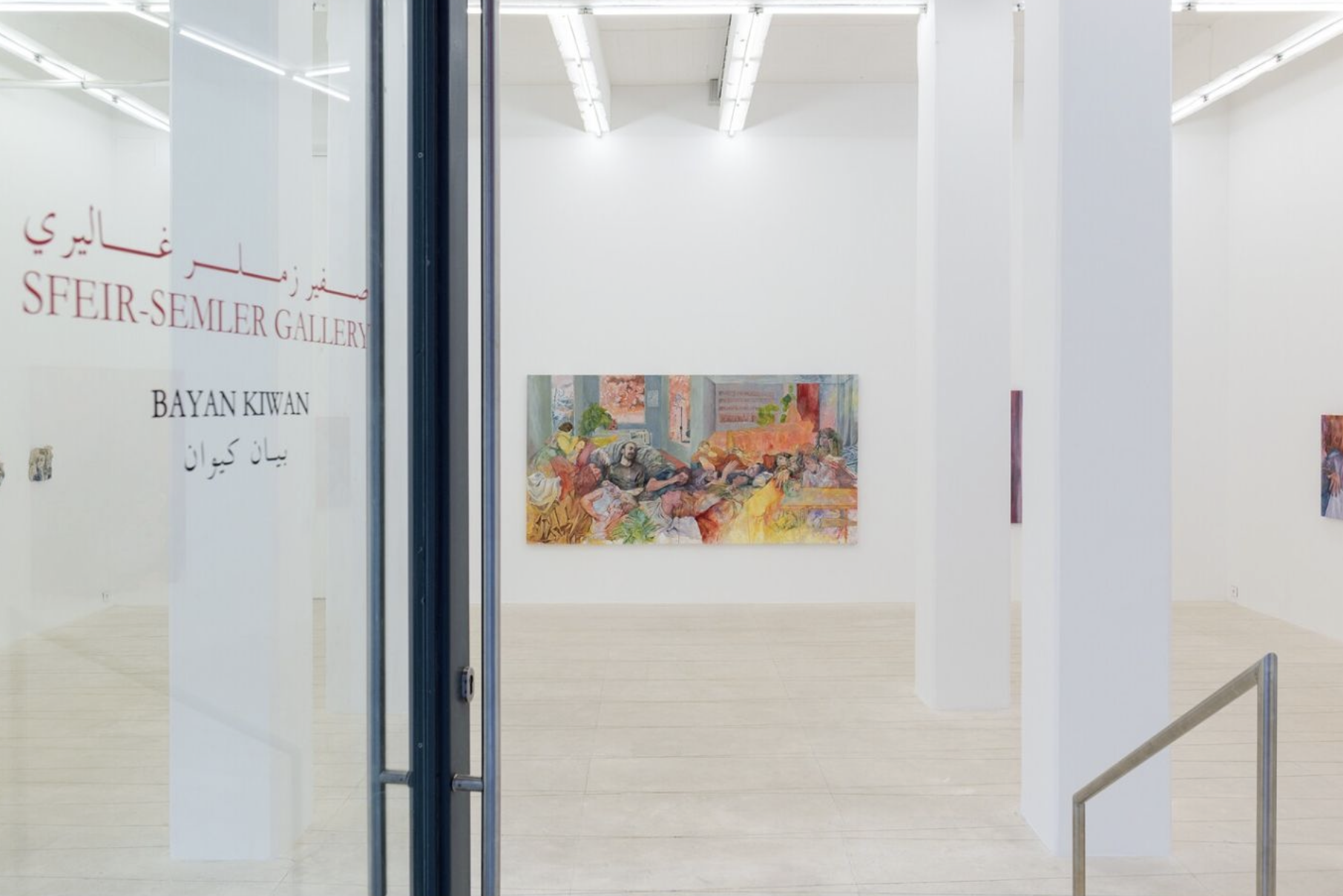
Bayan Kiwan, Intimate Trespasses, Sfeir-Semler Gallery’s downtown Beirut space, 2026. Installation photograph: courtesy the artist and Sfeir-Semler Gallery, Beirut/Hamburg. The gallery identifies this as Kiwan’s first solo exhibition with it.
Bayan Kiwan’s trajectory offers a concrete counterexample to absolute closure. Sfeir-Semler presented her solo exhibition Intimate Trespasses in 2026. An interview in The Sandy Times describes her invitation to its Blind Date group exhibition in 2023, followed by the solo three years later. The gallery described the group-show mechanism as a way to invite artists beyond its immediate roster whom its founder had followed. [11] [12]
Here, the value lies in an observable sequence: attention, a first invitation and a later commitment. The bright installation photograph records the public result. It does not reveal the unseen artists considered alongside her, or make the process universally accessible. But it demonstrates that a major gallery can widen its programme without abandoning continuity or its curatorial identity.
The relevant challenge is to make such development a dependable part of the field rather than an exceptional story. An invited group show is useful; regular discovery beyond familiar referral chains would be stronger. A first exhibition is useful; a second conversation about what the artist needs next is what turns visibility into support.
Lebanon already has practical precedents. Sursock Museum’s 2018 Salon d’Automne call offered appointments to help applicants complete submissions. Beirut Art Center’s 2025 emerging-artist call included a production budget and a jury involving external jurors. [13] [14] These details matter because they address the route into consideration and the means to make work, not just the promise of a wall.
Commercial galleries cannot be expected to become universal admission services. They can, however, state whether unsolicited portfolios are reviewed, make time for artists outside existing referral networks and distinguish genuine development commitments from one-off inclusion. Museums and nonprofit spaces have a different obligation: their claims to public cultural relevance require a broader account of whom they serve.
Collectors belong inside this discussion too. Buying a recognised name can support an artist’s long-term practice. It cannot substitute for every other form of patronage. A collector who wants a renewing scene can commission work before consensus, acquire from first exhibitions, support documentation or help finance production. The decisive commitment is to uncertainty: accepting that cultural value sometimes has to be sustained before a resale narrative can be written.
The price of a culture that cannot surprise itself
The evidence does not describe a sealed room. It describes a field with openings, repeated relationships and documented barriers. Its most consequential inequality is the unequal ability to turn work into recognised work. Those already inside have histories that justify another invitation; those outside are asked to produce histories before receiving one.
A healthy system does not need every exhibition to introduce a new name. It needs discovery to be an intentional, resourced activity. That means paying attention before an artist is easy to place, financing work before it is easy to sell, and maintaining contact after the opening photographs have circulated.
Nor should discovery be reduced to youth. A late debut, an interrupted career or a practice outside Beirut can require the same serious commitment as a recent graduate’s first exhibition. If “emerging” becomes a short age window, the people who have spent longest negotiating exclusion may become ineligible for the programmes meant to address it.
The loss caused by restricted access is larger than a list of artists who did not get shown. It includes works never completed, formal experiments abandoned and arguments that never reach public life. An exhibition archive cannot count those absences. Their invisibility is precisely why a scene must examine the conditions of entry rather than wait for a perfect record of everyone it failed to encounter.
Reputation becomes a substitute for curatorial discovery when a name answers the question before the work is examined. Lebanon’s galleries do not need to discard the artists they have developed. The wider ecosystem needs to demonstrate an equally deliberate commitment to people it has not yet learned to recognise. Otherwise contemporary culture risks becoming very good at preserving its hierarchy while losing the capacity to renew its imagination.
Sources and evidence notes
Sources checked 8 September 2026. References in the essay and the entries below are clickable. This is a researched critical essay using published reporting, sector studies and institutional archives; no new interviews are claimed.
[14] Beirut Art Center, Open Call for Emerging Artists, 2025. Jury and production support.